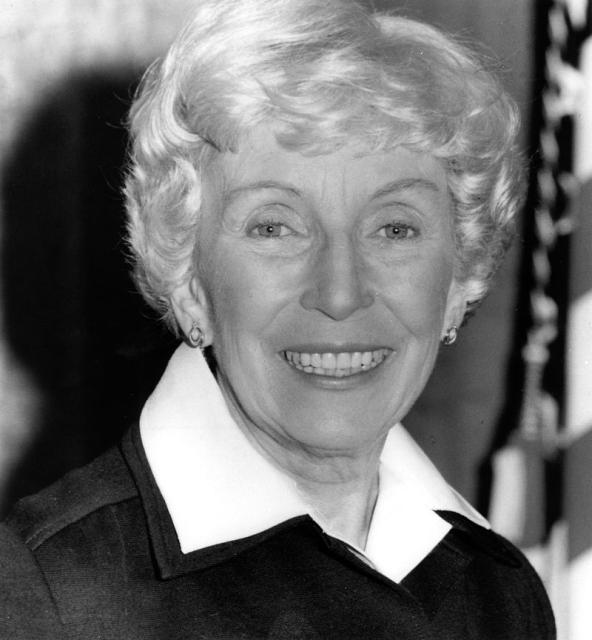
Muriel Humphrey Brown
 USA
USA- Early Life and Education
- Meeting and Marrying Hubert Humphrey
- Public Life and Support for Hubert Humphrey
- Second Lady of the United States
- U.S. Senator from Minnesota
- Legislation and Advocacy
- Return to Private Life and Legacy
Early Life and Education
Muriel Fay Buck was born on February 20, 1912, in Huron, South Dakota. Her father worked as a produce dealer, while her mother was a homemaker. Muriel attended public school and later Huron College from 1931-1932. After graduating, she worked as a bookkeeper.
Meeting and Marrying Hubert Humphrey
During her bookkeeping years, Muriel met Hubert Humphrey, a pharmacy assistant. They married on September 3, 1936. Muriel played a pivotal role in supporting her husband's education at the University of Minnesota and Louisiana State University by making sandwiches which he sold to students for 10 cents apiece. The couple had four children together: Hubert III, Nancy, Bob, and Douglas.
Public Life and Support for Hubert Humphrey
During World War II, Hubert Humphrey began teaching political science at the University of Minnesota and was elected Mayor of Minneapolis in 1945. He went on to serve three terms as a U.S. Senator from Minnesota. While Muriel Humphrey initially maintained a distance from her husband's public life, she became more actively involved in his campaigns during his second Senate race in 1954.
Second Lady of the United States
In 1964, Hubert Humphrey was elected Vice President under President Lyndon Johnson. As Second Lady from 1965 to 1969, Muriel Humphrey was portrayed in the press as a supportive wife and grandmother who sewed clothing for her family.
U.S. Senator from Minnesota
After Hubert Humphrey's unsuccessful presidential campaign, he was re-elected to the Senate twice more. In 1977, he was diagnosed with advanced cancer and passed away in January 1978. On January 25, 1978, Muriel Humphrey was appointed to the U.S. Senate to fill her husband's seat. She became the 12th woman in the Senate and the 5th who had succeeded her husband, though she was the only woman among 100 senators at the time. She represented Minnesota from January 25 to November 7, 1978, pending a special election.
Legislation and Advocacy
During her 10-month term, Muriel Humphrey served on the Foreign Relations and Governmental Affairs committees. She played a key role in getting the Panama Canal treaties ratified, a project her husband had championed. She also cast a pivotal vote in the Foreign Relations Committee in favor of President Jimmy Carter's proposal to sell military aircraft to Egypt, Israel, and Saudi Arabia. On the Governmental Affairs Committee, Humphrey lobbied for a successful amendment to the Civil Service Reform Act of 1978 that strengthened job protections for federal employees who exposed waste or fraud in government. She was also present at the signing ceremony of the Humphrey-Hawkins Full Employment and Balanced Growth Act of 1978, a bill her husband had authored.
Return to Private Life and Legacy
Muriel Humphrey announced on April 8, 1978, that she would not run for a full term in the Senate. She remarried in 1979 to Max Brown, a widowed businessman from Nebraska, and returned to Minnesota to live as a private citizen. She remained active in causes related to assisting the mentally challenged and participated in the Minnesota State Fair, where she won sewing awards. Muriel Humphrey-Brown passed away on September 20, 1998, at a Minneapolis hospital and was buried at Lakewood Cemetery in Minneapolis.