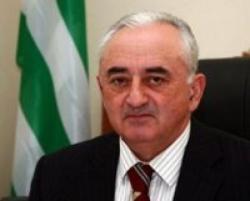
Mustafa Abdel Djalil
 Libya
Libya- Biography of Mustafa Abdel Jalil
- Leadership in the National Transitional Council
- Role in the Libyan Revolution
Biography of Mustafa Abdel Jalil
Mustafa Mohammed Abdel Jalil Fudail was born in 1952 in the eastern Libyan city of Al-Bayda. He received his education in Al-Bayda and went on to attend university in the populous Libyan city of Benghazi, where he specialized in Sharia and legislation. After graduating, Abdel Jalil worked as an assistant to the prosecutor's secretary in Al-Bayda. He was later appointed as a judge in 1978 and became a counselor in 1996. In 2002, he became the head of the appellate court in Al-Bayda and subsequently the city court.
Leadership in the National Transitional Council
In January 2007, Abdel Jalil was appointed as the Chairman of the General People's Committee for Justice in the Libyan Jamahiriya, effectively leading the country's Ministry of Justice under the leadership of Muammar Gaddafi. As Minister, he attempted to reform the legal system and protect the rights of Libyans whose properties had been confiscated by the regime. He also condemned the policy of granting Libyan citizenship to mercenaries from Chad and Niger. However, he tried to resign in protest against the mass executions of prisoners and the amnesty granted to murderers without the consent of their victims' families.
During his tenure as head of the Ministry of Justice, Abdel Jalil played a significant role in resolving the case of five Bulgarian nurses and a Palestinian doctor who were sentenced to death for allegedly infecting Libyan children with the HIV virus in 1998. Amnesty International addressed him shortly after his appointment, highlighting the unjustness of the sentence. The Supreme Court of Libya confirmed the death penalty on July 11, 2007, but a few days later, under Abdel Jalil's leadership, the General People's Committee for Justice commuted the sentences to life imprisonment. The convicted individuals were then handed over to Bulgaria on July 24, 2007.
Abdel Jalil's tenure as head of the General People's Committee for Justice focused on improving the conditions of prisoners. He implemented several significant amnesties and introduced a special program for the early release of prisoners who had memorized the Quran. In September 2009, the death sentences of Libyan nationals were commuted to life imprisonment. He also stood against the unlawful detention of Libyans, with his ministry promising monetary compensations to those who were imprisoned without trial or were acquitted after being held in custody.
Role in the Libyan Revolution
In early 2011, several Arab countries experienced anti-government protests. On February 16, 2011, unrest began in Benghazi and spread to other Libyan cities. The protests led to violent clashes between demonstrators and pro-government forces, but the opposition managed to take control of the eastern part of the country, including Benghazi. In protest against the violence committed by forces loyal to Gaddafi, many Libyan diplomats resigned, and on February 21, Abdel Jalil announced his resignation as well. Shortly after, he made several significant statements regarding the Gaddafi regime. He revealed that Gaddafi personally ordered the bombing of an aircraft in Lockerbie in 1988, which resulted in the deaths of 270 people. Abdel Jalil also held the regime responsible for the mass infection of children with HIV in 1998 and exposed the existence of secret prisons in major Libyan cities where individuals abducted by security agencies were unlawfully detained.
On February 26, 2011, Abdel Jalil, who was in eastern Libya, announced that he was working on forming a transitional government to counter the regime of Gaddafi, which held control over the western part of the country. He stated that the formation of the government would be preceded by a meeting of leaders from eastern Libyan clans. However, his announcement was contradicted by other rebel representatives the following day. On February 27, the National Transitional Council (NTC) was established in Benghazi, with the aim of representing different regions of Libya. It was emphasized that the council should not be considered a transitional government but rather as the "face of Libya" until Tripoli was captured and free elections were held. On March 2, 2011, Abdel Jalil assumed the leadership of the NTC. Five days later, he declared the council as the sole representative of Libya. On March 9, Libyan state television, broadcasting from Tripoli under Gaddafi's control, announced a reward for the capture of Abdel Jalil, amounting to $410,000.