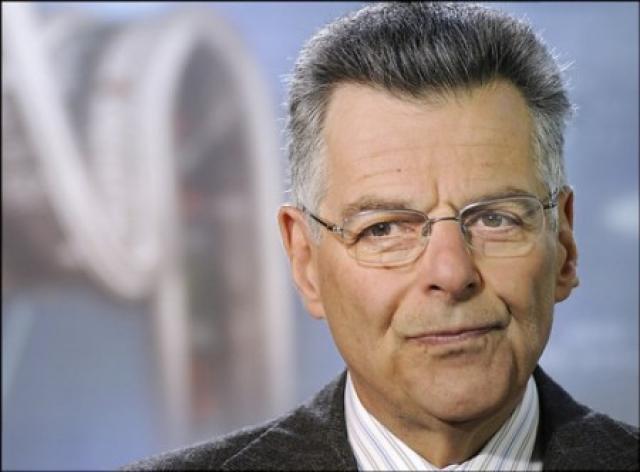
Myron Scholes
 USA
USA- Biography of Myron Scholes
- Early Life and Education
- Career and Contributions
- Long-Term Capital Management and Nobel Prize
Biography of Myron Scholes
Myron Scholes is a Canadian-American financier and Nobel laureate. He is widely regarded as one of the top experts in pricing various types of stocks and derivatives, and has made significant contributions to the field of economics. His knowledge and expertise in the subject earned him the Nobel Prize and helped him establish a successful career.

Early Life and Education
Myron was born in Timmins, Ontario, Canada. His family moved to Hamilton, Ontario during the Great Depression. Despite facing vision problems, Myron excelled academically. He underwent a special operation to address his vision issues when he turned 26.

Myron's interest in economics was sparked by his relatives, who involved him in their entrepreneurial activities. His parents further nurtured his passion for finance by opening a stock market account for him while he was still in high school. After his mother passed away, Myron continued his education in Hamilton and earned a bachelor's degree in economics from McMaster University in 1962.
Career and Contributions
One of Myron's professors introduced him to the works of George Stigler and Milton Friedman, both Nobel laureates in economics from the University of Chicago. Inspired by their research, Myron decided to pursue further studies at the University of Chicago. There, he met Michael Jensen and Richard Roll, who would become his collaborators in groundbreaking research on asset pricing. Together, they developed the famous option pricing model.
In 1968, Myron joined the Sloan School of Management at the Massachusetts Institute of Technology (MIT). During his time at MIT, he collaborated with Fischer Black and Robert C. Merton on a revolutionary project that led to the development of the options pricing model. Simultaneously, he worked at the Center for Research in Security Prices, analyzing high-frequency stock market data.
In 1981, Myron moved to Stanford University, where he remained until his retirement in 1996. He held an honorary professorship at Stanford and focused his research on bank investment economics and tax planning schemes in commercial finance.
Long-Term Capital Management and Nobel Prize
In 1990, Myron decided to become more actively involved in financial markets. He worked as a special consultant at Salomon Brothers before becoming a manager and one of the leaders of the Fixed Income Securities Control Group. In 1994, Myron, along with several colleagues, co-founded the hedge fund Long-Term Capital Management (LTCM).
LTCM initially achieved impressive returns, exceeding 40%. However, it later faced significant financial crises, resulting in losses of $4.6 billion in less than four months. Myron also faced legal troubles regarding his company's violation of tax legislation.
In 1997, Myron Scholes and Robert C. Merton were jointly awarded the Nobel Prize in Economics for their groundbreaking method of determining the value of derivatives. Unfortunately, Fisher Black, who worked with Myron and Merton on this method, passed away in 1995 and was unable to share the prize.
Myron Scholes continues to be recognized as a distinguished economist and holds the honor of being an endowed professor at Stanford University.


