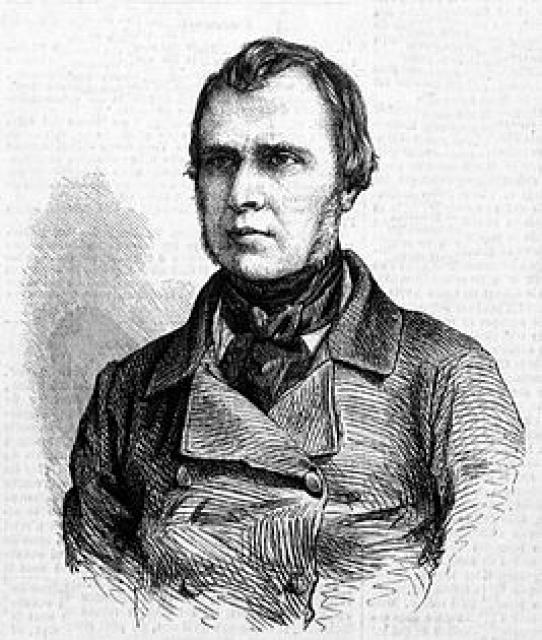
Narcisse Girard
 France
- Early Life and Education
- Professional Debut and Tours
- Conductor and Premieres
- Notable Achievements
- Tragic Death
Early Life and Education
Nicolas-Charles Bochsa was born in Montmédy, France, on August 9, 1789. His musical talent emerged early on, and he began studying violin at a tender age. At the age of 15, he became a student at the prestigious Naples Conservatory. Later, he continued his training at the Paris Conservatory, where he studied under renowned violinist Pierre Baillot and composer Antonin Reicha.
Professional Debut and Tours
In 1820, Bochsa graduated from the Paris Conservatory and embarked on a series of concert tours throughout Italy. His exceptional violin playing garnered widespread attention and acclaim. In 1829, he returned to Paris and commenced working with various Parisian orchestras.
Conductor and Premieres
Bochsa's reputation as a conductor grew rapidly. He led the orchestra at the Italian Opera before being appointed to the Opéra-Comique in 1836. From 1849 to 1859, he served as the conductor of the Orchestre de la Société des Concerts du Conservatoire de Paris. During this period, he conducted the premiere performances of Hector Berlioz's "Harold in Italy" (1834), Giacomo Meyerbeer's "Le Prophète" (1849), and Charles Gounod's "Sapho" (1851).
Notable Achievements
Bochsa's conducting career was marked by several notable achievements. He was instrumental in promoting the dissemination of Berlioz's music, conducting a series of concerts dedicated to his works. He also led the first performance of Wagner's "Lohengrin" in France in 1850.
Tragic Death
Bochsa's life was cut short on January 6, 1856. While conducting a performance of Meyerbeer's "Les Huguenots" at the Opéra-Comique, he collapsed and died during the intermission. Bochsa's untimely death was a great loss to the musical world, as he was widely regarded as one of the most gifted and innovative conductors of his time.



