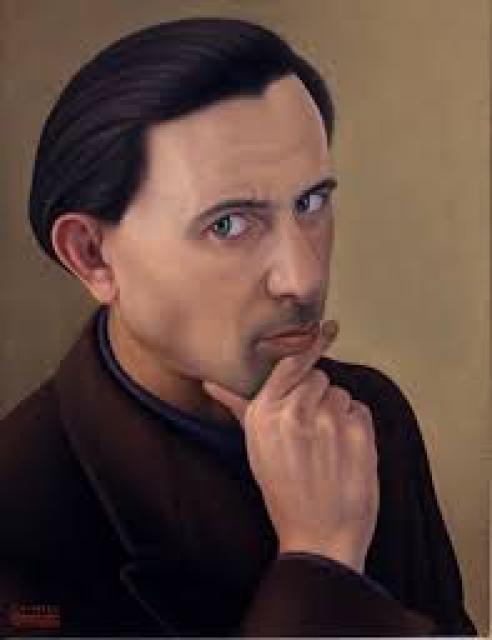
Natale Bentivoglio Scarpa
 Italy
Italy- Niccolò Barabino Scarpa: A Master of Magical Realism
- The Birth of Cannaccio di San Pietro
- World War II and Hospitalization
- Artistic Style and Subject Matter
- "After the Orgy"
- Influence on Hyperrealism
Niccolò Barabino Scarpa: A Master of Magical Realism
Early Life and EducationNiccolò Barabino Scarpa, an Italian artist celebrated for his contributions to Magical Realism, was born into the family of a lighthouse keeper. His passion for art led him to pursue studies at the Academy of Fine Arts in Venice.
The Birth of Cannaccio di San Pietro
Around 1920, Scarpa adopted the pseudonym Cannaccio di San Pietro, paying homage to his parents' hometown. Initially immersed in Salon painting and influenced by Futurism, he later became a prominent figure in the Italian variant of New Objectivity.
World War II and Hospitalization
During World War II, Cannaccio di San Pietro's deteriorating health led him to spend the war years in a Venetian hospital. He passed away in 1946, leaving behind an impressive body of work.
Artistic Style and Subject Matter
Candiaccio di San Pietro's artistic repertoire encompassed portraits, nudes, still lifes, religious scenes, and everyday subjects. His works are characterized by meticulous attention to detail and a haunting, dreamlike atmosphere.
"After the Orgy"
Considered a masterpiece of Italian Magical Realism, "After the Orgy" (1928) depicts three nude women sleeping in various poses on a floor strewn with the remnants of a night of excess. The precision and realism of their portrayal suggest a photograph, while the hidden faces allude to an underlying mystery.
Influence on Hyperrealism
Candiaccio di San Pietro's "After the Orgy" inspired the work of hyperrealist sculptor John de Andrea. In his 1990 "Reclining Figure," de Andrea recreated the pose of one of the sleeping women, highlighting the enduring influence of Cannaccio di San Pietro's enigmatic art.



