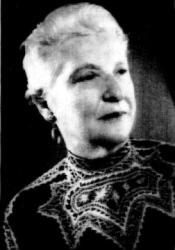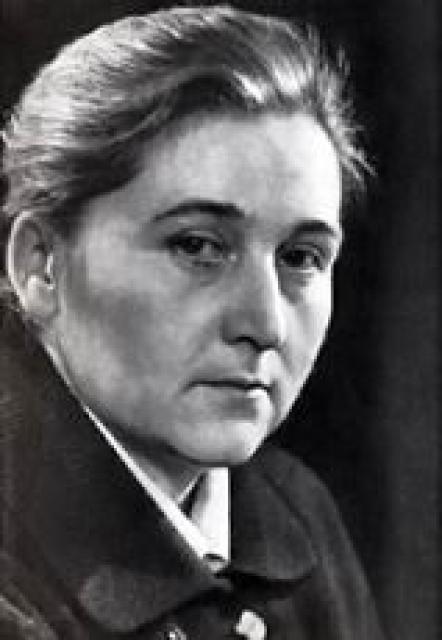
Natalia Astafieva
 Poland
Natalia Astafyeva: A Bilingual Lyrical Bridge
Early Life and FamilyNatalia Astafyeva was born in Warsaw, Poland, where she spent her early childhood. Her parents, both Polish, instilled in her a love of Polish, her first language. In 1928-1930, the family resided in Berlin. In 1931, they moved to Moscow, where Natalia learned Russian and attended school. She began writing poetry in her adopted language in the fifth grade.
Natalia's father, Jerzy Czeszejko-Sochacki, was a prominent Polish socialist and Communist Party leader. In 1933, he was arrested and tragically committed suicide in prison. Natalia's mother, Józefa, was also arrested and exiled to a labor camp in Kazakhstan.
Childhood in Kazakhstan
Following her father's arrest, Natalia moved to Pavlodar, Kazakhstan with her younger brother and later worked as a secretary. Her passport contained an erroneous patronymic, "Grigorievna" instead of "Georgievna," a reflection of the mismatch between her Polish and Russian heritage.
In 1941, she graduated from a pedagogical school in Pavlodar and worked as a teacher. She later married Alexander Romanov-Astafyev, a political exile, and lived in the district center of Krasnokutsk, working as an accountant.
Literary Career
Astafyeva began publishing her poetry in 1944. In 1956, her debut as a poet came in the "Literary Gazette." A year later, she married the poet Vladimir Britanishsky. In 1959, her first book of poetry, "Girls," was published, followed by "Pride" in 1961.
Return to Poland
In the 1960s, Astafyeva's poems began to be translated and published in Poland. In 1963, a collection of her Russian verses appeared in Warsaw. Inspired by this, she began writing and translating in Polish, bridging the linguistic divide between her birth country and adopted home.
Natalia Astafyeva continued to publish extensively, both in Russian and Polish. She became a member of the Union of Writers in 1961 and the Russian PEN Center in 1997. Her work earned critical acclaim and international recognition. She passed away in 2006, leaving behind a rich legacy as a bilingual poet who celebrated the universality of human experience.