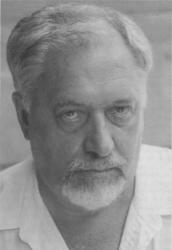
Nataliya Rojdestvenskaya
 Russia
- Natalia Rozhdestvenskaya: A Pioneer in Educational Psychology
- Academic Career at MSU
- Dissertation and Publications
- Research and Supervision
- Legacy
Natalia Rozhdestvenskaya: A Pioneer in Educational Psychology
Early Life and EducationNatalia Andreevna Rozhdestvenskaya embarked on her academic journey at Moscow State University (MSU) in 1973. She graduated with honors in psychology (Department of General Psychology) and pedagogy (English language) from Moscow State Pedagogical Institute of Foreign Languages Maurice Teresa.
Academic Career at MSU
In 1991, Rozhdestvenskaya joined the Department of Pedagogy and Pedagogical Psychology at MSU. She has held the esteemed position of Associate Professor since 1992. Additionally, she has served as Deputy Head of the Department for Educational Work since 1991.
Dissertation and Publications
Rozhdestvenskaya earned her Ph.D. in Pedagogical Psychology in 1991, having successfully defended her dissertation on the "Formation of the Cognitive Component of Interpersonal Perception among High School Students." In 2004, she submitted her doctoral dissertation for examination in Pedagogical Psychology, titled "Modes of Interpersonal Cognition, Their Development, and Formation among Teachers, Parents, and Students."
Research and Supervision
Under Rozhdestvenskaya's expert guidance, numerous students have successfully defended their diploma theses (over 40) and doctoral dissertations (5). She has shared her wealth of knowledge through her textbook, "Understanding Adolescents," and her scientific monograph, "Modes of Interpersonal Cognition: A Psycholinguistic Perspective."
Legacy
Throughout her career, Rozhdestvenskaya has made significant contributions to educational psychology. Her published works and research have enlightened educators and researchers globally. Her dedication to the field continues to inspire and shape the minds of new generations of scholars.