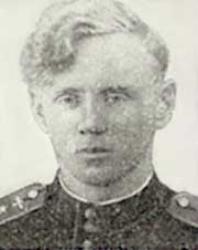
Nelson Stepanian
 Azerbaijan
- Biography of Nelson Stepanyan
- The Early Years
- Bravery and Skill
- A Life Saved by Quick Thinking
- A Skilled and Respected Leader
- "Nelson, my friend, you have changed a lot," he said.
- A Leader of the Party Bureau
- Saved by Quick Thinking
- "Will he fly in such weather?" the technicians chatted.
- Only a few seconds remained for aiming...
Biography of Nelson Stepanyan
Nelson Georgievich Stepanyan was a pilot, navigator of an aviation regiment, and a Hero of the Soviet Union. During the Great Patriotic War, he served as a flight leader, squadron commander, and later as a navigator of an aviation regiment, personally destroying or participating in the destruction of 53 enemy vessels. On October 23, 1942, P.G. Stepanyan was awarded the title of Hero of the Soviet Union. In December 1944, while carrying out an important combat mission, he was killed. On March 6, 1945, Colonel N.G. Stepanyan was posthumously awarded the second "Gold Star" medal. He was also awarded numerous other orders. Nelson Georgievich Stepanyan was of Armenian nationality. He had been a member of the CPSU since 1932. He joined the Soviet Army in 1941.
The Early Years
On June 23, 1941, Nelson Stepanyan wrote to his family: "As long as my heart beats, my sacred duty is to defend our beloved Motherland, our beautiful Soviet people, our flourishing cities and villages with every drop of blood. My place is in the front lines as a defender of the Motherland." Nelson Stepanyan fulfilled his duty: he was always at the forefront of defending the homeland.
Bravery and Skill
In the summer of 1941, during fierce battles near Odessa, Stepanyan carried out a combat mission as part of a group of attack aircraft. Flying at low altitude, they approached the front line when Stepanyan saw enemy cavalry rapidly approaching the forward defense line of their troops. Quickly assessing the situation, he directed his aircraft towards the cavalry. His comrades followed suit. The panicked horses reared and fell, throwing off their riders. When the group of attack aircraft turned around and attacked the cavalry again, the pilots noticed that the horses were riderless, as some had been thrown off and the rest had jumped off. The attack aircraft made several passes, directing the movement of the enormous herd towards Soviet units. Soon, our soldiers caught and calmed down the frightened horses. After making sure the gift was in reliable hands, the pilots turned their planes towards their airfield as fuel was running low. The mission was completed, and the enemy's advance was thwarted.
Even in his early combat missions, Junior Lieutenant Stepanyan displayed bravery and skill. His pre-war training proved valuable. It was no wonder that he was considered one of the best instructors during advanced flight training courses. He worked hard, often spending evenings studying textbooks, trying to better understand his aircraft. Nelson loved his challenging, dangerous, and worrisome profession. His good knowledge of the aircraft's technology, especially the specifics of his own aircraft, his composure, and coolness, often helped him in difficult situations.
A Life Saved by Quick Thinking
A year before the war, he had an incident. Stepanyan was flying at a low altitude above a city in a single-seat aircraft. Colorful roofs of houses, green trees, and people on the sidewalks flashed below. The sun brightly illuminated the streets, making them look even more elegant and cheerful. Suddenly, everything changed. Stepanyan did not understand what had happened at first. He heard several loud backfires, and then a strange oppressive silence fell.
"The engine has failed," Stepanyan realized. "What to do? There is nowhere to land the plane, houses are everywhere. Should I jump with a parachute?" Yes, according to the instruction, he was supposed to jump. But that was according to the instruction... He would save himself, but the uncontrollable plane would fall onto the sunlit city, onto the houses, onto the people... No, he couldn't jump!
A second, a third... The roofs of the houses were getting closer. The plane was descending. Stepanyan knew: a moment of hesitation, a wrong move, and death is inevitable. He needed to make a decision immediately, the one and only correct decision in this situation. Land the plane. But where? There was no suitable landing spot in the city. That meant he had to stretch it, fly as far as possible. And it wasn't a glider, it was a heavy plane, losing altitude more and more. The junction was inexorably approaching...
But Stepanyan had not studied the flight data of his aircraft in vain. With imperceptible, cautious movements of the pedals and control stick, he maintained control of the descending aircraft. The outskirts of the city were getting closer. The wheels were almost touching the roofs. Ahead was a tall building. A jerk of the stick, and the obedient machine, as if hitting an invisible obstacle, soared upwards, flew over the building, and headed towards the ground. In the last moment, Stepanyan managed to level the plane, and it hopped, running over the plowed field...
There were many incidents in Stepanyan's aviation career where seconds made the difference. The number of such incidents became immeasurably greater during the war. His fearlessness, composure, and skill saved him.
A Skilled and Respected Leader
Despite enormous losses, the enemy continued to advance. Nights became bright from fires, and during the day, the crimson sun shone through the smoky haze. Houses and warehouses burned, unharvested wheat fields were set ablaze, shedding heavy grains. But resistance to the enemy grew with each passing day. Stepanyan aimed to increase his combat record. With bold and unexpected strikes, the attack aircraft destroyed enemy tanks, vehicles, artillery, and personnel.
In early September 1941, Nelson was wounded. He had to stay in the hospital, and then he was sent to the Baltic States.
At an airfield near Leningrad, he unexpectedly met his old friend Mikhail Klimenko, with whom he had studied at the flight courses. Klimenko quickly approached the headquarters and came face to face with Stepanyan. Wide-eyed in astonishment, he slapped him on the shoulder and exclaimed, "Nelson, is that you? How did you come back from the dead?"
Stepanyan did look worse for wear. But his joyful smile immediately made him look like the old Nelson again. Those close to him knew his favorite joke. He often said to his wife before flights, "If the flights suddenly stop and you don't hear the sound of engines, don't worry. It doesn't mean I've crashed. I can't be without people for long, so I'm stopping the flights. Listen carefully, and you'll hear my laughter. After all, our home is only a few kilometers from the airfield!"
Stepanyan's laughter was infectious, giving himself fully to the joyful and witty joke. Warmth and kindness wonderfully intertwined with his demanding and principled nature. The pilots knew this and loved their instructor very much.
Klimenko looked admiringly at Stepanyan and saw that the war had left its mark on this always cheerful young man: wrinkles appeared around his lips, something new appeared in his large, always affectionate eyes, his gaze became more intense, more focused.
"Nelson, my friend, you have changed a lot," he said.
"I have changed, Misha," he replied. "I've become angry, oh so angry! I couldn't wait to be discharged from the hospital. I can't wait to get back in the plane!"
The entire air force knew Nelson. The pilots admired his skill, daring strikes against the enemy. In every flight, Stepanyan tried to apply something new, discover the weaknesses of the enemy, and exploit them fully.
One day, he led a group on an attack mission against an enemy airfield. The group approached the target at low altitude. The raid was so unexpected that the enemy's anti-aircraft artillery did not have time to open fire. The attack aircraft dropped their bombs and began to move away from the airfield. But Stepanyan noticed that several enemy aircraft remained undamaged. It was risky to turn back and attack them: the previously silent anti-aircraft guns had come to life.
Nevertheless, Stepanyan decided to take the risk. Turning away from his group, he directed his plane back towards the airfield. Approaching the airfield, he lowered the landing gear. The anti-aircraft artillery ceased fire, thinking that the Soviet plane was voluntarily landing on their airfield. Near the parking lots, where enemy bombers burned brightly, German soldiers rushed around trying to put out the fire. A little further away were several undamaged aircraft.
The Soviet attack aircraft descended lower and lower. But suddenly, instead of landing, Stepanyan gave full throttle, retracted the landing gear, and dropped his bombs. He joyfully watched as three enemy aircraft, which had survived the first attack, burst into flames. Now, it was time to go home! Smoke plumes from the explosions surrounded his plane. Enraged Germans, twice deceived by Stepanyan, tried to shoot down the audacious pilot at all costs, but it was too late — the attack aircraft escaped unharmed, except for a few bullet holes.
But bullet holes were common. Technicians had learned to patch them up so quickly that by morning, the plane was ready for another flight.
After a successful sortie, Stepanyan would return to his usual cheerful self, joking with his comrades and recounting funny stories.
A Leader of the Party Bureau
Party bureau secretary Nelson Stepanyan was the soul of the collective. Pilots often came to him for help, advice, or simply to talk to their party leader. Lively and energetic, he could not stand idleness or laziness. Even during designated rest periods, he would say, "Now is not the time to rest. If we're not flying, we need to prepare ourselves for the next flight."
At every opportunity, he tried to pass on his experience to the pilots. The lessons he conducted always had a creative character. Stepanyan never imposed his opinion on the listeners. He liked it when a young pilot debated with him, proving the advantages of their tactical approach. However, more often than not, it turned out that Stepanyan was right, but the very desire for something new and creative was beneficial. He instilled in his subordinates confidence in their abilities, fearlessness, and the will to victory, setting an example for them.
Saved by Quick Thinking
The day was beautiful. Light clouds floated across the high bluish sky, occasionally obscuring the sun, but it did not become darker. Bright rays pierced the edges of the clouds, making them turn pink before filling them with light again. The wind was strong at altitude. The clouds moved one after the other towards the horizon, merging into a narrow grayish strip. Their movement irritated Stepanyan. "Caught in a jet stream," he thought with a smile, recalling a common joke among pilots. So, he also dreams of "getting caught in a jet stream," surrendering to chance, living quietly, calmly, without worries, without a fight... No! Even in peacetime, he did not stoop to such things, and now, during the war, he couldn't settle for any laxity. After all, some members of the regiment had become fond of taking it easy. He had heard comments that now was not the time for training and regulations. Stepanyan decided to talk to the communists.
He managed to summon people for a conversation. The communists expressed their thoughts openly, assessed the current situation, and made suggestions to strengthen discipline. Stepanyan felt that the communists would help eliminate shortcomings and strengthen discipline.
"Discipline and combat training are two components of success," Stepanyan said at a meeting.
Some pilots, after achieving initial success in combat sorties, believed that they had nothing more to learn. Sometimes, it turned out that young pilots were more eager to learn from the combat experience, while their instructors, who were supposed to set an example, showed less enthusiasm for ground training. They thought that skill would come naturally in battle.
Stepanyan firmly opposed such attitudes. During training sessions and flight preparations, he instilled in his subordinates that those who did not learn anything new today would fall behind tomorrow. He often showed, by personal example, how to approach each task, how to seek new and improved tactical approaches, how to learn about their own and the enemy's aircraft, in order to make full use of the capabilities of both the aircraft and the ground support.
He had the same demands for both the ordinary pilots and their instructors. He did not make any allowances for anyone. On the contrary, he demanded that flight leaders prepare more thoroughly as it was their duty to assist their subordinates.
Stepanyan was concerned about the isolation of certain pilots who believed that their duty was only to engage in combat. They flew and left. It seemed as if they were not concerned with the interests of the collective. He reported such pilots at a party meeting.
"There should be no such behavior among pilots. If you know how to fight, teach the young ones how you were taught," Stepanyan said.
The communists supported him. They frequently held joint sessions with ground service specialists and the flight staff. This helped to thoroughly familiarize everyone with each other's work, identify and eliminate deficiencies, and generalize and disseminate combat experience.
During night flights on new aircraft, some pilots experienced difficulties during landing. Commander Stepanyan came to their aid. At the slightest mistake or inaccuracy, he first looked for the cause. He didn't leave any violations unexamined. After explanations on the ground, he would often take to the air and show how to land.
Stepanyan patiently taught through example, how to act during landing, using the best and most experienced pilots as examples. And he succeeded - there were fewer mistakes in battle and in landings under difficult conditions, and losses were reduced, improving flight skills.
After one of the flights, the pilots nicknamed Stepanyan "The Stormbird." It was true. It was a gloomy, rainy day. Huge storm clouds rolled across the sky, descending to the ground. The wind, filled with cold moisture, pierced through to the bone. Dark shadows flickered near the aircraft. Nelson was supposed to take off on a mission.
"Will he fly in such weather?" the technicians chatted.
"Will he fly? Of course, he'll fly in any weather! Just watch to make sure the aircraft is ready: he doesn't like disorder..." Their conversation was interrupted by Nelson.
"Hello, eagles!" he cheerfully greeted the technicians. "I wish you good weather!"
After returning the greeting, one of the technicians hesitantly asked, "Will you fly, Comrade Commander? The weather is not suitable for flying, is it?"
"I will fly, Sergeant. And this is the most suitable weather; it's perfect for flying!"
A few minutes later, the commander's plane swiftly passed over the airfield and disappeared into the clouds.
Nelson Stepanyan flew alone on a combat mission. He was supposed to strike enemy transports, which had been detected by aerial reconnaissance. However, the reconnaissance information had arrived long ago. During that time, the weather had deteriorated, and the transports were no longer in the same place. The command did not want to take unnecessary risks and suggested Stepanyan send only one crew for the attack.
"The mission will be accomplished," Stepanyan replied curtly and took off himself.
At low altitude, the plane raced over the surface of the Gulf of Finland. The foamy crests of the waves shone with snowy white. The flickering waves were tiresome; the minutes passed slowly. But Stepanyan confidently steered the aircraft to the designated location. It was no wonder he was considered not only an excellent pilot but also a first-class navigator. In any weather, he quickly determined the aircraft's position, noticed the slightest changes that had occurred on the ground when he had flown over it before.
Now it was more difficult. Only the most experienced and courageous pilot could venture out in such weather. After all, in addition to being able to independently locate the target, immense skill was required to pilot the aircraft in such weather with the expectation of returning to the airfield. How much courage a pilot must have, leading a heavy single-engine aircraft over the sea! The slightest malfunction, engine failure, not to mention damage to the plane in combat, and death was inevitable. Stepanyan loved life, but he did not think about it now. The desire to find the enemy's transport concealed everything else in his consciousness.
Finally, Stepanyan spotted blurry silhouettes of ships on the water ahead. Transports! He had finally found them! The pilot confidently directed the attack aircraft towards the largest one.