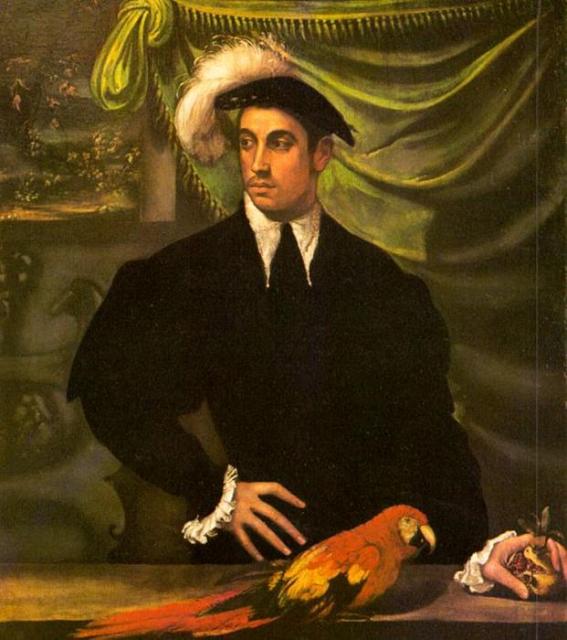
Niccoloo dell Abbate
 Italy
Italy- Early Life and Training
- Influences in Modena
- The Fontainebleau School
- Major Works at Fontainebleau
- Collaborations and Legacy
Early Life and Training
Niccolò dell'Abbate, an Italian painter, was born around 1512 in Modena. His father was a sculptor, instilling an appreciation for art in Niccolò from a young age. He studied under Antonio Begarelli, showcasing the influence of the Ferrarese school, particularly artists like Garofalo and Dosso Dossi.
Influences in Modena
Niccolò's early works in Modena were dominated by mythological subjects, reflecting the Ferrarese influence. In 1547, he moved to Bologna, where he encountered the works of Correggio and Parmigianino. This encounter marked a significant turning point in his artistic development, solidifying his mature style.
The Fontainebleau School
In 1552, Niccolò moved to France, where he spent the remainder of his life. He played a crucial role in establishing the "Fontainebleau School" as one of its founders. The school was known for its graceful lines and affinity for mythological scenes.
Major Works at Fontainebleau
At the royal court in Fontainebleau, Niccolò collaborated with other artists to adorn the palace. His most celebrated work there was the "Martyrdom of Saints Peter and Paul," which exhibited the influence of Correggio. Unfortunately, a significant portion of his Fontainebleau contributions has been lost.
Collaborations and Legacy
In his later years, Niccolò worked closely with his four sons. He passed away in Fontainebleau in 1571. His artistic legacy continued to inspire French painters such as Claude Lorrain and Poussin. Niccolò dell'Abbate remains recognized as a pivotal figure in the transition from the Italian Renaissance to the French Mannerist style.