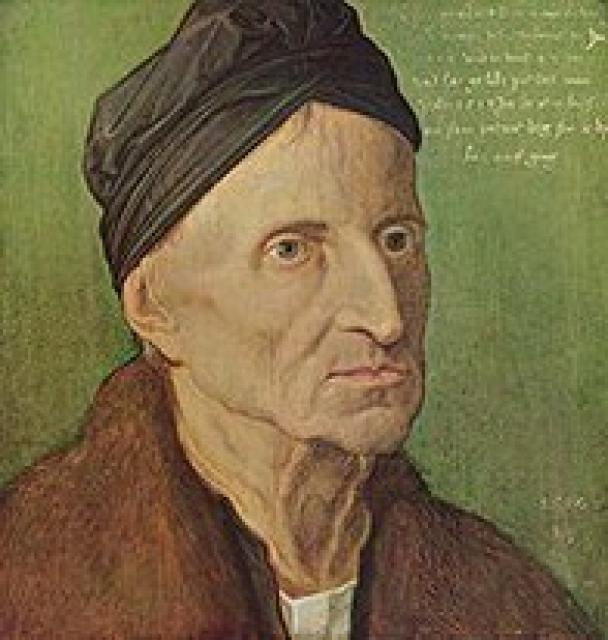
Michael Wolgemut
 Germany
- Michael Wolgemut: A Master of Nuremberg's Artistic Renaissance
- Early Life and Influences
- Master of Nuremberg's Artistic Guild
- Collaborative Endeavors
- Artistic Legacy
- Portraiture and Other Works
- Conclusion
Michael Wolgemut: A Master of Nuremberg's Artistic Renaissance
Michael Wolgemut, a German painter, engraver, and woodcarver, was a prominent figure in the Nuremberg school of painting. He is best known as the master to Albrecht Dürer, who apprenticed in his workshop from 1486 to 1489.
Early Life and Influences
Born into a family of artisans, Wolgemut likely received his initial training in the workshops of Flemish painters. He married the widow of his employer, Hans Pleydenwurff, and inherited his workshop. Wolgemut's style reveals the influence of Rogier van der Weyden and other Netherlandish masters.
Master of Nuremberg's Artistic Guild
In 1486, Wolgemut assumed the position of master in the Nuremberg painters' guild. He received prestigious commissions, such as the decoration of the Saxon elector Frederick the Wise's palace in Wittenberg (lost during World War II).
Collaborative Endeavors
Together with his stepson Wilhelm Pleydenwurff, Wolgemut illustrated the monumental "Nuremberg Chronicle." Their collaboration resulted in a series of intricate woodcuts that depicted historical events and biblical scenes.
Artistic Legacy
Wolgemut's most renowned works include the Peringsdörffer Altarpiece (now in the Church of Peace, Nuremberg), the carved and painted altarpiece for St. Mary's Church in Zwickau, the murals in the town hall of Goslar, the altarpiece in the Church of St. John the Baptist in Schwabach, and four altarpiece panels in Munich's Alte Pinakothek.
Portraiture and Other Works
In addition to his religious and allegorical paintings, Wolgemut also produced portraits, capturing the likenesses of prominent Nuremberg citizens. He also excelled as a engraver, producing numerous woodcuts for books and other publications.
Conclusion
Michael Wolgemut's significant contributions to the arts of Nuremberg solidified his place as a master of his time. His influence on younger artists, including Albrecht Dürer, further cemented his legacy as one of the most influential figures in German art history.


