Nicholas Bacon
 Great Britain
- Sir Nicholas Bacon, Lord Keeper of the Great Seal
- Legal and Political Career
- Religious Toleration under Mary I
- Rise under Elizabeth I
- Foreign Policy
- Lord Chancellor of England
- Opinions on Royal Marriages
- Church of England
- Legacy
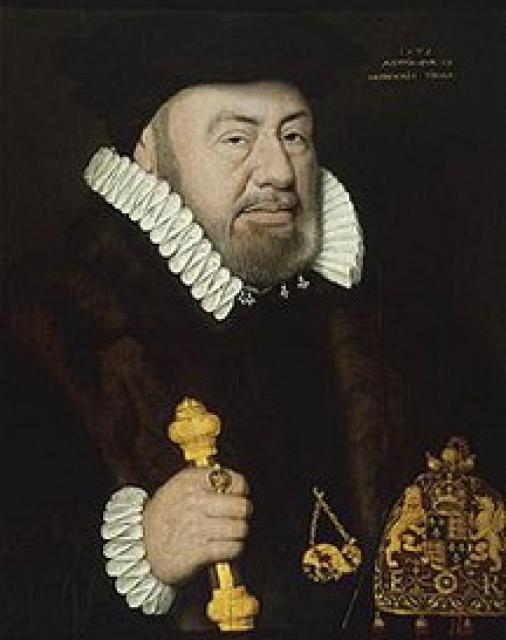
Sir Nicholas Bacon, Lord Keeper of the Great Seal
Early Life and EducationNicholas Bacon was born into a noble family in 1527. He earned a Bachelor of Arts degree from Cambridge University before spending time in Paris.
Legal and Political Career
After his return to England, Bacon studied law at Gray's Inn and was called to the bar in 1533. In 1546, he became an Attorney of the Court of Wards and Liveries. His legal success and political connections led to his appointment as Justice in 1550 and Treasurer of Gray's Inn in 1552.
Religious Toleration under Mary I
Despite his Protestant sympathies, Bacon maintained his position in court during the reign of Catholic Queen Mary I. He was, however, prohibited from leaving England.
Rise under Elizabeth I
Upon Elizabeth I's accession, Bacon's career flourished thanks to his close friendship with his father-in-law, Sir William Cecil. In 1558, he became Lord Keeper of the Great Seal, a member of the Privy Council, and a peer of England.
Foreign Policy
Bacon advocated for strong ties with Protestants abroad. Unlike Cecil, he opposed war with France, believing England lacked the resources.
Lord Chancellor of England
In 1559, Elizabeth appointed Bacon as Lord Chancellor. However, he temporarily fell out of favor in 1564 due to suspicion of his involvement in a pamphlet supporting Lady Jane Grey's claim to the throne.
Opinions on Royal Marriages
As an opponent of Catholicism, Bacon expressed concerns about Mary Queen of Scots' marriage to the Duke of Norfolk and opposed Elizabeth's potential marriage to the French prince Francis, Duke of Anjou.
Church of England
As an Anglican, Bacon emphasized church matters and education. He was a consistent supporter of Matthew Parker as Archbishop of Canterbury.
Legacy
Nicholas Bacon died in 1579 and was buried in St. Paul's Cathedral in London. He was the father of philosopher and statesman Sir Francis Bacon. His contributions to English law, politics, and the Anglican Church left a lasting impact on his country's history.