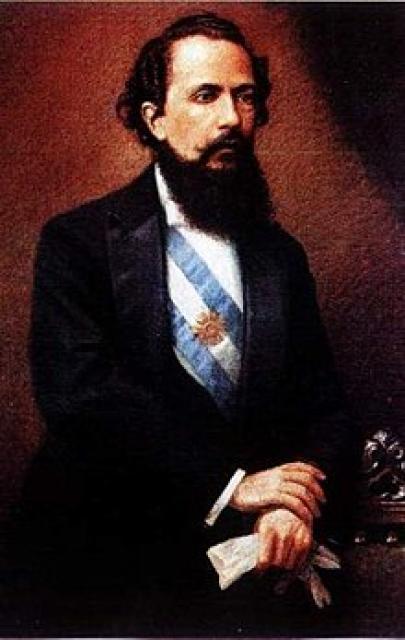
Nicolas Avellaneda
 Argentina
- Nicolás Avellaneda: Argentina's Youngest Elected President
- Early Life and Political Roots
- Rise in Politics and Journalism
- Influence Under Sarmiento
- Ascendancy to the Presidency
- Suppression of the Mitre Rebellion
- Pacification of the Desert
- Legacy and Later Years
Nicolás Avellaneda: Argentina's Youngest Elected President
Nicolás Avellaneda (1837-1885) emerged as a prominent figure in Argentine politics and served as the nation's youngest elected president in its history.
Early Life and Political Roots
Born into a family of distinguished politicians, Nicolás Avellaneda was the son of Marco Manuel de Avellaneda, a unitarian officer who was executed during the rebellion against the federalist leader Juan Manuel de Rosas. After his father's demise, Nicolás and his widowed mother fled to Bolivia, where he spent his childhood. Upon Rosas's overthrow, Avellaneda returned to Argentina and pursued a legal education in Cordoba and Buenos Aires.
Rise in Politics and Journalism
Throughout his early career, Avellaneda actively engaged in journalism, working for publications such as "El Comercio del Plata" and editing "El Nacional." His intellectual contributions and political acumen earned him a seat in the legislative assembly multiple times from 1860 onward.
Influence Under Sarmiento
During Domingo Faustino Sarmiento's presidency, Avellaneda served as Minister of Justice, Ecclesiastical Affairs, and Public Instruction. Under his stewardship, the nation's education system underwent significant advancements.
Ascendancy to the Presidency
In 1874, Avellaneda emerged as the Republican Party's presidential candidate. He was elected by a wide margin, becoming the youngest president in Argentine history at the age of 37.
Suppression of the Mitre Rebellion
Avellaneda's tenure witnessed the outbreak of the Mitre rebellion. Former president Bartolomé Mitre rallied troops to challenge Avellaneda's authority. However, General Julio Roca swiftly suppressed the insurrection, securing Avellaneda's position.
Pacification of the Desert
Inspired by the geopolitical theories of Adolfo Alsina, Avellaneda initiated the "Conquista del Desierto" campaign in 1879. The military campaign, led by General Roca, aimed to conquer the vast Central Pampa region, which had long been controlled by indigenous tribes. The campaign was marred by brutal tactics.
Legacy and Later Years
Avellaneda's presidency ended in 1880. He passed away in 1885 while returning from Europe. His remains were laid to rest in the Recoleta Cemetery in Buenos Aires. The city of Avellaneda was named in his honor.


