Jean-Felix Picard
 France
- Biography of Jean Picard
- Advancements in Observational Techniques
- Collaborations and Further Research
- Legacy and Honors
Biography of Jean Picard
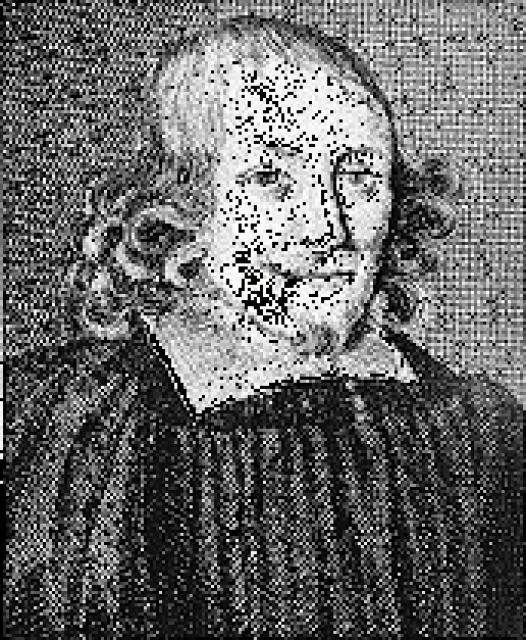
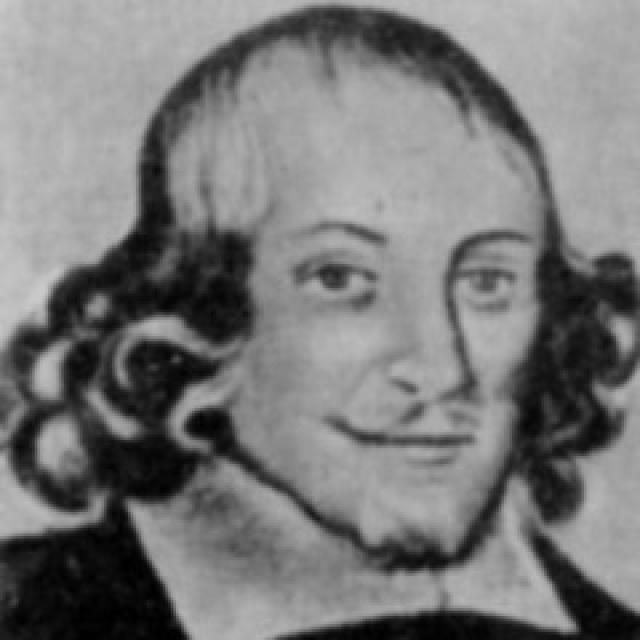
Jean Picard, a French astronomer, was born on July 21, 1620. Little is known about the biography of this astronomer. It is possible that in his younger years he completed a seminary and became a clergyman. However, detailed information about his scientific research has been fully preserved. Picard improved the instruments and methods of observing celestial bodies that were available to him at that time, enhancing their accuracy.
Advancements in Observational Techniques
One of his notable achievements was the development of a micrometer with movable threads. This instrument allowed him to measure the angular diameters of the Sun, Moon, and planets. Picard also pioneered the use of a unique telescope sight with crossed threads at the focal point in angular measuring instruments. This enabled him to measure the length of the Earth's meridian with great precision and subsequently calculate the radius of the Earth. The value for the length of one degree of the meridian calculated by Picard differed from the current value by only 30 meters. It was Picard who first proposed the idea that the Earth is not perfectly spherical but slightly flattened at the poles.
Collaborations and Further Research
Picard collaborated with many scientists, including the renowned Christiaan Huygens, and even his main rival Giovanni Domenico Cassini. His astronomical investigations went beyond geodesy, which occupied a significant portion of his time. He studied the phenomenon of light aberration, which refers to the apparent displacement of an observed object due to the properties of light and the movement of the observer. Picard also observed the phenomenon of phosphorescence in various substances. His research later contributed to the development of spectrometry.
Legacy and Honors
Jean Picard passed away on July 12, 1682. In his honor, an orbital observatory dedicated to solar observation has been named after him.