Nigel Farage
- Early Life and Political Beginnings
- A European Platform and the Brexit Campaign
- Parliament and Public Image
- Personal Life and Legacy
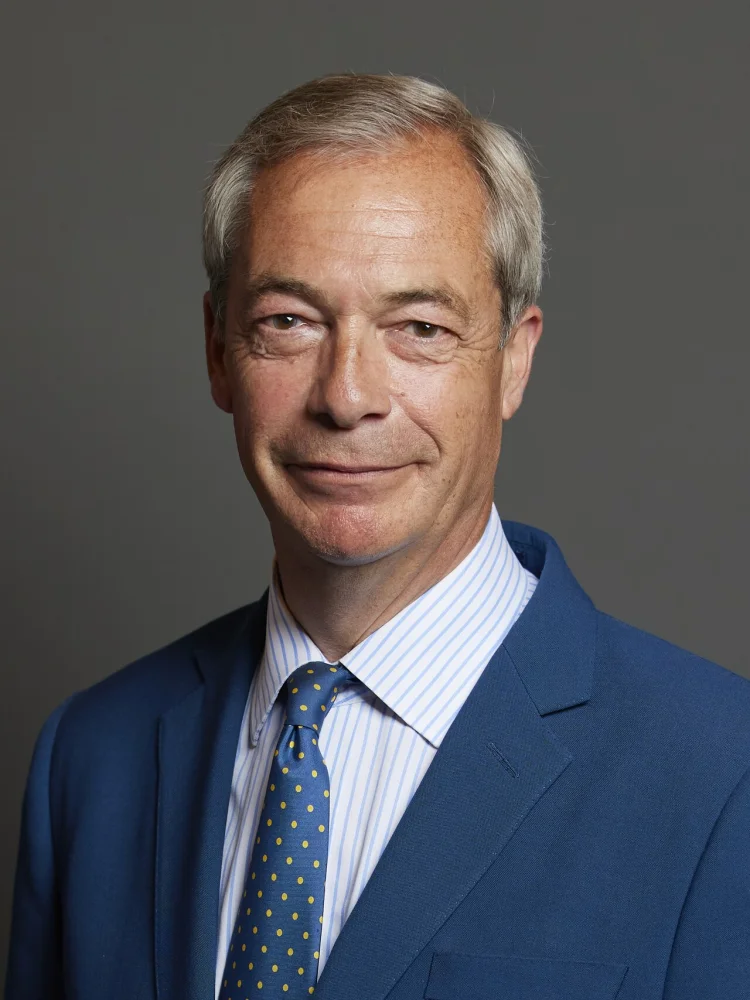
Nigel Farage has spent much of his public life campaigning against Britain’s membership in the European Union, building a reputation as one of the country’s most recognizable and divisive political figures. His long career took him from the European Parliament to the House of Commons, while the Brexit campaign he championed reshaped British politics.
Early Life and Political Beginnings
Born in Farnborough, Kent, on April 3, 1964, Farage was educated at Dulwich College in south London. After leaving school, he worked in the City of London as a commodities trader. He entered politics as a Conservative but broke with the party over its support for the Maastricht Treaty, which helped lay the foundations for the modern European Union.
In 1993, he became one of the founding members of the UK Independence Party (UKIP), a party whose central aim was Britain’s withdrawal from the EU. Farage built his career around that cause, combining forceful speeches with a direct, conversational style that played well on television and at public meetings.
A European Platform and the Brexit Campaign
Farage was elected to the European Parliament in 1999, representing South East England, and remained an MEP until the United Kingdom left the EU in 2020. He led UKIP from 2006 to 2009 and again from 2010 to 2016. In Brussels, he became known for outspoken attacks on the EU’s institutions and for high-profile exchanges with European leaders.
In 2016, Farage was a prominent campaigner for leaving the European Union during the referendum. The Leave campaign won a narrow majority, and the result set off years of political negotiation and conflict over how Brexit would be carried out. Farage resigned as UKIP leader after the vote, saying that his political goal had been achieved, though he remained a public voice in debates over the terms of withdrawal.
When the Brexit process stalled, he returned to the center of electoral politics. In 2019, he led the Brexit Party, which won the largest share of the vote in that year’s European Parliament election in the United Kingdom. The party later became Reform UK. Farage initially stepped away from leadership, but returned to lead the party in 2024.
Parliament and Public Image
For years, Farage was a prominent national politician without a seat in the House of Commons. He stood unsuccessfully in several general elections before winning Clacton for Reform UK in July 2024, becoming a Member of Parliament for the first time. He remains the party’s leader and represents the Essex constituency.
Farage’s political success rests on his ability to frame complex issues in plain, memorable language and to present himself as an outsider challenging a distant establishment. Supporters see him as a persistent advocate for national sovereignty and voters who felt ignored; critics argue that his rhetoric has deepened political divisions and that his claims on immigration and national identity demand close scrutiny. His highly visible persona, including his fondness for pubs and informal campaign settings, has made him a familiar figure beyond Parliament.
Personal Life and Legacy
Farage has been married twice and has four children. He generally keeps his family life separate from his political campaigning, although his public profile has often drawn attention to his private affairs. In 2010, he survived a serious light-aircraft crash while campaigning in the general election, suffering injuries that required hospital treatment.
His career is closely tied to one of the defining changes in modern British politics. Farage did not hold ministerial office during the Brexit negotiations, but his decades of campaigning helped keep withdrawal from the EU at the center of national debate. As Reform UK leader and an elected MP, he continues to shape discussions over immigration, the economy, and the country’s direction after Brexit.