Perdiccas
Perdiccas rose from Alexander the Great’s inner circle to become the most powerful figure in the Macedonian empire after the king’s sudden death. As guardian of the royal family and commander of the army in Asia, he tried to hold together a vast realm whose generals were already competing for power. His brief regency ended in defeat, but it set the pattern for the wars among Alexander’s successors.
A Commander in Alexander’s Service
Perdiccas was a Macedonian noble from Orestis, a region in the kingdom’s western highlands. He served in Alexander’s army during the conquest of the Persian Empire and rose through the command structure. By 330 BCE he had been promoted to the royal bodyguard, a position that placed him close to the king and at the center of military and court affairs.
He commanded infantry and cavalry in several campaigns and gained experience during the long expeditions through Asia. After the death of Hephaestion in 324 BCE and the return of Craterus to Macedonia with veterans, Perdiccas became one of Alexander’s senior commanders. The surviving narratives of his career were written by later authors, and some accounts of him reflect the hostility of his rival Ptolemy.
The Succession Settlement
Alexander died in Babylon in 323 BCE without an adult heir. His wife Roxana was pregnant, and the Macedonian army had to decide how to preserve the monarchy. Perdiccas helped secure recognition for Alexander’s half-brother Arrhidaeus, who became king as Philip III, with the understanding that Roxana’s unborn child would also inherit if male. The child, Alexander IV, was subsequently acknowledged as a joint king.
Perdiccas emerged from the settlement with authority over the royal army and custody of the kings. Ancient sources differ over the precise title he held, describing him as regent or guardian of the monarchy, but his practical power was immense. He presided over the division of the empire’s provinces among the commanders, known as the Successors or Diadochi. Yet the arrangement left ambitious generals in control of distant territories, each with their own troops and resources.
War Among the Successors
The new order soon fractured. Ptolemy, assigned Egypt, moved to secure his own independence and took possession of Alexander’s funeral procession, carrying the king’s body to Egypt. Perdiccas regarded this as a challenge to his authority and launched a campaign against him. Meanwhile, Antipater, Craterus, and Antigonus formed an opposing coalition.
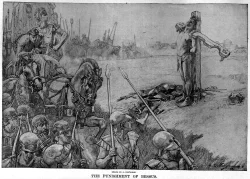
Perdiccas’ political choices deepened the conflict. He broke off his planned marriage to Nicaea, daughter of Antipater, and sought to marry Cleopatra, Alexander’s sister. The move may have strengthened a claim to rule through the royal family, but it alarmed the other commanders. In 321 BCE, while campaigning in Egypt, Perdiccas failed to cross the Nile successfully and lost many soldiers in the attempt. His own officers, including Peithon, Seleucus, and Antigenes, turned against him and killed him in his tent.
Legacy
Perdiccas’ death did not restore unity. The generals met again to redistribute authority, and the wars over Alexander’s inheritance continued for decades, eventually producing separate Hellenistic kingdoms. He had tried to preserve a single empire under the joint kings, but the competing ambitions of its commanders and the distances involved made that vision difficult to sustain.
His career illustrates the precarious transition from conquest to succession. Perdiccas had the army, the royal household, and a powerful claim to central authority, yet these assets could not overcome the distrust of the other Successors. His regency was brief, but its collapse opened the first major struggle over who would inherit Alexander’s world.