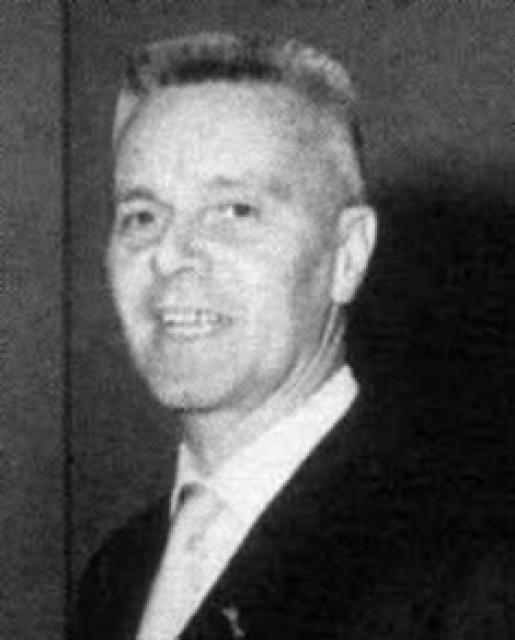
Nikolaas Tinbergen
 Netherlands
- Nikolaas Tinbergen: A Pioneer in Ethology
- Scientific Expeditions and Imprisonment
- Professorship and Contributions to Ethology
- Animal Behavior Research
- Key Concepts and Influences
- Human Aggression and Social Behavior
- Legacy and Publications
- The Study of Instinct (1951)
Nikolaas Tinbergen: A Pioneer in Ethology
Early Life and EducationNikolaas Tinbergen, a renowned Dutch zoologist, was born on April 15, 1907, in The Hague. He pursued his academic education at Leiden University, where he earned his doctorate in 1932 with a dissertation on the behavior of seagulls.
Scientific Expeditions and Imprisonment
Tinbergen participated in scientific expeditions to the Arctic, where he studied the behavior of various animal species. Upon his return to Leiden, he became a lecturer at the university. However, in 1942, he faced imprisonment in a concentration camp for expressing opposition to the authorities. He was released in 1945.
Professorship and Contributions to Ethology
After his release, Tinbergen assumed the role of Professor of Experimental Zoology and Head of the Department of Zoology at Leiden University in 1947. In 1949, he joined Oxford University, where he held the position of Professor from 1966 onwards.
Animal Behavior Research
Tinbergen's primary research focus was on animal behavior in natural settings. Together with Konrad Lorenz and Karl von Frisch, he established the field of ethology, which explores the innate and learned aspects of animal behavior, its evolution, and its adaptive significance.
Key Concepts and Influences
Tinbergen's work explored the role of stimuli in group behavior, selective responses to environmental cues, and the interplay between innate and acquired behavioral components. He also delved into the evolution of behavior and the survival functions it serves.
Human Aggression and Social Behavior
Tinbergen applied his observations of animal behavior to understand human aggression, proposing that this trait evolved during the human species' transition to hunting and meat consumption.
Legacy and Publications
Tinbergen's extensive research has had a profound impact on the scientific understanding of animal behavior. His contributions to ethology have earned him widespread recognition, including the Nobel Prize in Physiology or Medicine in 1973.
Tinbergen authored numerous books that continue to inform and inspire researchers and enthusiasts alike, including:
The Study of Instinct (1951)
Social Behavior in Animals (1953)The Herring Gull's World (1953)
Curious Naturalists (1958)
Animal Behavior (1965)
Nikolaas Tinbergen passed away in Oxford on December 21, 1988, leaving an enduring legacy as one of the pioneers of ethology.


