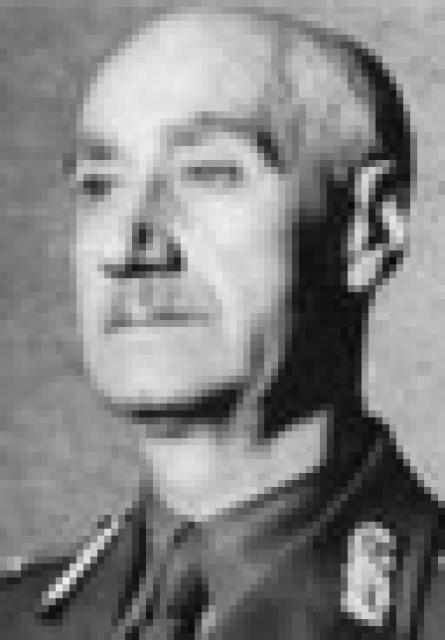
Nikolae Redesku
 Romania
- Nicolae Rădescu: A Romanian General and Statesman
- Early Career and Political Affiliations
- The Post-Antonescu Era: Rise to Power
- The Communist Crisis and Forced Resignation
- Soviet Influence and Transylvanian Diplomacy
- Exile and Anti-Communist Legacy
Nicolae Rădescu: A Romanian General and Statesman
Nicolae Rădescu, born on March 30, 1874, in Călimănești, Romania, was a renowned military leader and politician who played a pivotal role in Romania's history.
Early Career and Political Affiliations
Before World War II, Rădescu led the far-right "Crusade of Romanianism" party, a splinter group of Corneliu Codreanu's "Iron Guard." In 1942, under the dictatorship of Ion Antonescu, he published a critical article condemning the interference of German ambassador Manfred von Killinger in Romania's internal affairs. This act led to his arrest and detainment in the Târgu Jiu concentration camp.
The Post-Antonescu Era: Rise to Power
Following the overthrow of Antonescu on August 23, 1944, Rădescu was released and appointed Chief of Staff of the Romanian Army. On December 7, he assumed the role of Prime Minister. As a staunch anti-communist, Rădescu sought to emulate Greece's successful anti-communist movement.
The Communist Crisis and Forced Resignation
Rădescu's anti-communist policies faced fierce opposition from the Romanian Communist Party (RCP), which organized mass demonstrations in late February 1945. The situation escalated when unidentified provocateurs opened fire on the crowd, resulting in the deaths of approximately 10 people. Amidst intense pressure from the Soviet Union and the RCP, Rădescu was forced to resign on March 1, 1945.
Soviet Influence and Transylvanian Diplomacy
Reportedly, Stalin's envoy, Andrei Vishinsky, threatened to withhold the return of Northern Transylvania to Romania if Rădescu remained in power. His successor, Petru Groza, with considerable Soviet support, swiftly resolved the Transylvanian issue in Romania's favor.
Exile and Anti-Communist Legacy
In 1946, Rădescu sought refuge in the British embassy before fleeing to the United States, where he founded an anti-communist group of Romanian émigrés. Rădescu's remains were returned to Romania and buried with honors in Bucharest's Bellu Cemetery on November 23, 2000. His legacy as a fearless opponent of communism and a patriotic Romanian statesman endures today.