Nikolay Buryak
 Ukraine
- Biography of Nikolai Buryak
- Early Life and Pilot Training
- The First Victory
- The Trial and Triumph
- The Last Battles
Biography of Nikolai Buryak
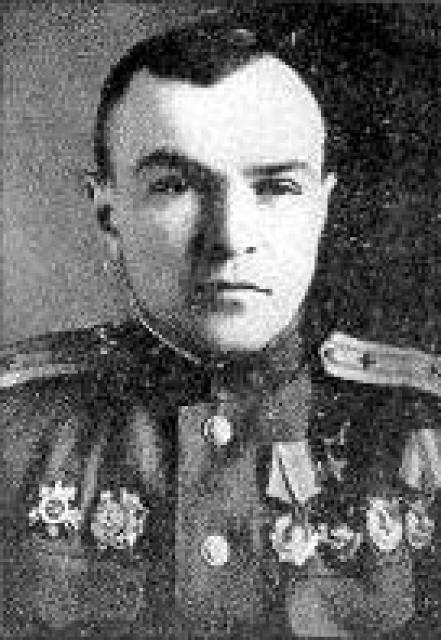
Nikolai V. Buryak, a fighter pilot, was born on January 15, 1919, in the village of Zhelannoe, now known as Pervoe in the Marinsky district of the Donetsk region, into a peasant family. He completed 9 grades of school and the vocational school at the Krasnogorovsk Firebrick Plant. In 1937, he joined the Red Army and graduated from the Voroshilovgrad Military Aviation School for Pilots in 1940. He served on various fronts during the Great Patriotic War, including the Crimean, Southern, North Caucasus, Transcaucasian, Voronezh, Steppe, and 2nd Ukrainian fronts.
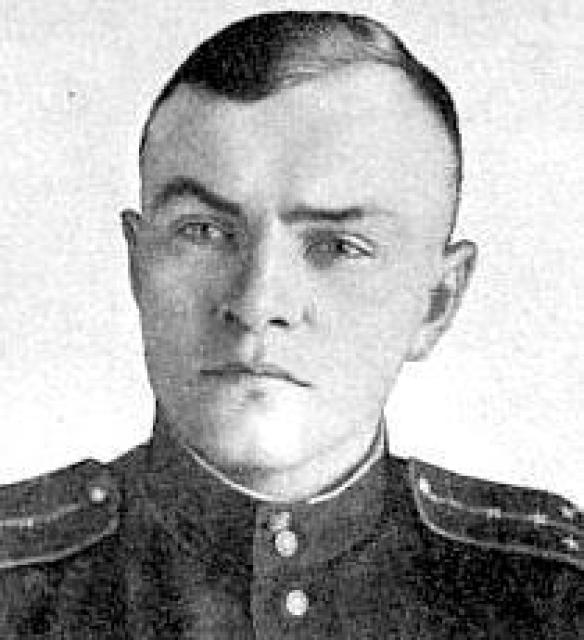
By September 1943, Buryak had become the commander of the 247th Fighter Aviation Regiment (203rd Fighter Aviation Division, 1st Assault Aviation Corps, 5th Air Army, Steppe Front). He carried out 254 combat sorties and participated in 84 aerial battles, personally shooting down 11 enemy aircraft and 1 as part of a group. On February 4, 1944, he was awarded the title of Hero of the Soviet Union for his courage and valor in the battles against the enemy.
After the war, Buryak continued to serve in the Air Force. In 1947, he graduated from the Higher Officer Flight and Tactical Courses. From 1949, he worked in the Society for Sport and Technology (DOSAAF). In 1960, Colonel Nikolai V. Buryak retired from active duty. He was awarded the Orders of the Red Banner (three times), Alexander Nevsky, the Patriotic War 1st and 2nd classes, and the Red Star, as well as various medals.
He lived in the city of Kolomna in the Moscow region and worked as the head of the personnel department of an automobile column. Nikolai V. Buryak passed away on December 27, 2006.
Early Life and Pilot Training
Like many young boys of his time, Nikolai Buryak joined one of the branches of the Donetsk (Stalin) Aero Club in the city of Krasnogorovka through the Komsomol program. He then trained at the pilot school and became a military pilot.
The First Victory
Spring had arrived on the Kerch Peninsula. The land was coming alive with vibrant colors, and the sea, previously gloomy with a leaden hue, was turning blue. Nature exuded peace and tranquility, but uninvited intruders shattered it. German bombers, heavily loaded, droned ominously in the sky, barely encountering resistance from the anti-aircraft gunners. Our pilots did not have time to intercept the enemy planes; they noticed them only after they dropped their bombs and flew at low altitudes towards the sea. Nikolai spotted one of the "Junkers" directly above the sea, at an altitude of 20-30 meters. Approaching from the left, he opened fire but without success. However, since the speed of his "Yak" was higher than that of the Ju-88, Buryak attacked the enemy again from the right. This time, the gunner on the "Junkers" hesitated for a moment. Nikolai opened fire and raked the bomber's fuselage with a long burst. Reluctantly, it tilted, spewing orange flames, and descended. Soon, a white spot appeared on the water, followed by a cloud of steam, and the enemy aircraft disappeared beneath the waves. It was his first victory!
The Trial and Triumph
But soon, Nikolai had to endure the bitterness of defeat and face a difficult trial. The group led by Lieutenant Colonel Y. N. Kutikhin took off from the airfield at Chersonesos. They caught up with the bombers but also encountered 12 "Messerschmitts." A fierce battle ensued. After some time, Nikolai saw two Me-109s closing in on the group leader from behind, preparing to attack.
He had to warn the commander of the danger immediately! But how could he do that? His plane did not have a radio, so he had to change the direction of his flight and parallel his partner while firing his machine guns, hoping they would notice the tracers. And so he did. But at that moment, he found himself in the crosshairs of an enemy fighter. He took several bursts to his right wing, and the fuel splashed, igniting and spreading to the cockpit, blinding the pilot. Nikolai unbuckled his seat belt and pulled the control stick sharply away from himself. It felt as though he had been thrown out of the cockpit. A few seconds later, the fuel tanks exploded.
He had to make it to the water. Using a hose, he inflated a rubber belt with his mouth, unbuckled the chest strap and leg loops, released himself from the harness, and plunged about 5 meters into the water.
The sea was restless around him. He swam until his hands turned blue and grew heavy. The salty water, like sandpaper, rubbed against his face. His head grew heavy, and his numb hands could no longer feel the cold. But what was that? In the distance, he heard the sound of an engine. Was it a hallucination? No, a boat was approaching him. How long had he been in the water? He looked at his watch - exactly 2 hours since he had landed in the water.
The boat maneuvered cautiously, trying not to hit Nikolai. They threw a rope, but the pilot couldn't grab it - it was slippery, and his fingers were not responding well. Then they tied a log to the rope. Finally, he managed to press it against his body. Then they pulled him aboard.
This was Nikolai's 14th combat mission... How many more would this remarkably brave and good-natured young man accomplish?!
The Last Battles
Nikolai Buryak flew his last aerial battle during the Berlin Operation, where he shot down his 17th enemy aircraft. His final combat sortie took place after Victory Day, in the skies of Czechoslovakia. In total, during the war years, he completed 395 successful combat sorties, participated in 104 aerial battles, and personally shot down 16 enemy aircraft, as well as 1 in a group. He mastered various types of fighters, including the I-16 and different models of the Yak.