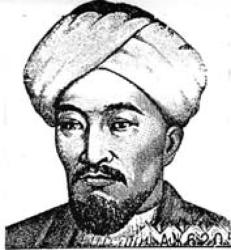
Nikolay Gartman
 Germany
Biography of Nikolai Hartmann
Nikolai Hartmann (also known as Niklas Hartmann) was a German idealist philosopher and the founder of critical (or new) ontology. He was born on February 20, 1882, in Riga, which was part of the Russian Empire at the time. Hartmann came from a German family and grew up in Riga. He completed his secondary education in St. Petersburg and went on to study medicine at the University of Tartu (then known as Dorpat) and philosophy at the University of St. Petersburg. Afterward, he enrolled at the University of Marburg.
Hartmann served as a professor of philosophy at various universities throughout his career. He taught at the Universities of Marburg (1922-1925), Cologne (1925-1931), Berlin (1931-1945), and Göttingen (1945-1950). As a student of Paul Natorp and Hermann Cohen, he was influenced by the Marburg School of Neo-Kantianism. However, dissatisfied with its subjectivism, Hartmann developed his own ontological concept, known as "new ontology," under the influence of Edmund Husserl and Max Scheler. His major work, "The System of Ontology" (1933-1950), modernized the Aristotelian-Scholastic doctrine of being.
According to Hartmann, being has a layered structure and should be considered as a hierarchy of four qualitatively distinct levels: inorganic, organic, psychic, and spiritual. The forms of existence and the categorical structure of these layers are not the same. For instance, immaterial layers (spirit and psyche) only exist in time. Each higher level is rooted in the lower but is not fully determined by it. Lower forms of being are more active in self-affirmation, while higher forms possess greater freedom of manifestation.
Hartmann believed that fundamental philosophical problems were insoluble. In ethics, following Scheler's ideas, Hartmann developed a theory of immutable "ethical values." The main question in this field for Hartmann was the relationship between values and the freedom of the will, which he viewed as the interaction of two kinds of forces: ideal (values that serve as a guide for the will) and real (the will that actualizes values). Some of Hartmann's students included poet Boris Leonidovich Pasternak and philosopher Hans-Georg Gadamer. His early works in the philosophy of biology are occasionally referenced in contemporary studies and discussions on genomics and cloning.
Works
- Grundzüge der Metaphysik der Erkenntnis. 4th edition. Berlin, 1949.
- Hartmann, N. Aesthetics. Moscow, 1958.
- Hartmann, N. Old and New Ontology. In Historico-Philosophical Yearbook. 1988. Moscow: Nauka, 1988. pp. 320-324.
- Hartmann, N. Systematic Philosophy in My Own Exposition. St. Petersburg: Azbuka, 2001.
- Hartmann, N. The Problem of Spiritual Being. Research on the Foundation of the Philosophy of History and the Sciences of the Spirit. In Culturology. 20th Century. Moscow, 1995.
- Hartmann, N. Ethics. Translated by A. B. Glagolev, edited by Yu. S. Medvedev, D. V. Sklyadnev. St. Petersburg: University Foundation; Vladimir Dal, 2002.
- Hartmann, N. Towards the Foundation of Ontology. Translated by Yu. V. Medvedev, edited by D. V. Sklyadnev. St. Petersburg: Nauka, 2003. (The Word About Being). ISBN 5-02-026827-5