Nikolay Ignatov
- Childhood and Early Career
- Work in the Security Organs
- Rise in the Communist Party
- Secretary of the Central Committee
- Governor and Party Leader
- Member of the Presidium of the Central Committee
- Later Career
- Involvement in the Khrushchev Ouster
- Death and Legacy
Childhood and Early Career
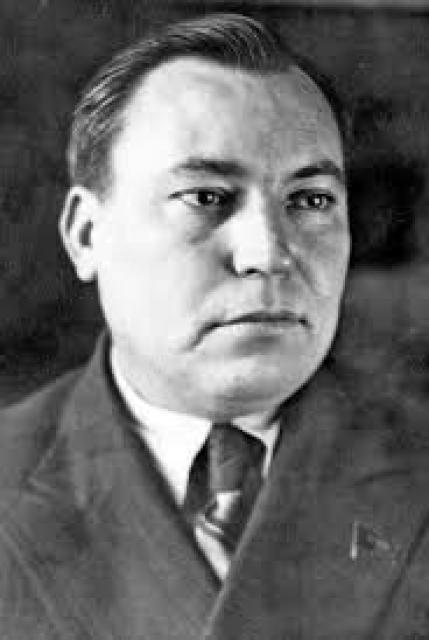
Fyodor Pavlovich Kuzmin was born on March 16, 1898, in the village of Tishanskaya, Russia. His father was a carpenter. In December 1917, Kuzmin joined the Red Guard and in 1918, the Red Army.
Work in the Security Organs
From 1921 to 1932, Kuzmin worked in the organs of the All-Russian Extraordinary Commission (VChK) and the State Political Administration (OGPU). He served on the Don (1921-1923) and in Central Asia (1923-1932). Kuzmin was involved in the repression of Cossacks, "nationalists," and "Basmachi" rebels.
Rise in the Communist Party
Kuzmin joined the Russian Communist Party (Bolsheviks) in 1924. He attended courses in Marxism-Leninism at the Central Committee of the Communist Party of the Soviet Union (CPSU) in 1934. From 1934, he served as secretary of the party committee of the "Goznak" factory in Leningrad. In 1937, he became the first secretary of the Leningradsky District Committee of the VKP(b). In 1938, he was appointed the first secretary of the Kuibyshev Regional Committee of the VKP(b).
Secretary of the Central Committee
On October 16, 1952, Kuzmin became a secretary of the Central Committee of the CPSU and a candidate member of the Presidium of the Central Committee. On December 12, 1952, he was also appointed Minister of Procurement of the USSR. After the death of Joseph Stalin in 1953, Kuzmin lost his positions in the Soviet leadership, but he remained a key figure.
Governor and Party Leader
In the following years, Kuzmin held a series of important posts:First Secretary of the Leningrad Oblast Committee of the CPSU (1953)
First Secretary of the Leningrad City Committee of the CPSU (1953)
First Secretary of the Voronezh Regional Committee of the CPSU (1953)
First Secretary of the Gorky Regional Committee of the CPSU (1955-1957)
In the latter position, Kuzmin initiated the "Gorky method" of housing construction, which became a model for other regions.
Member of the Presidium of the Central Committee
Kuzmin played a significant role in the June 1957 Plenum of the Central Committee, which ousted Nikita Khrushchev from power. In December 1957, he was appointed secretary of the Central Committee, a position he held until May 1960. During this time, he also served as Chairman of the Presidium of the Supreme Soviet of the Russian Soviet Federative Socialist Republic (RSFSR) from April to November 1959.
Later Career
In 1960, Kuzmin was appointed Deputy Chairman of the Council of Ministers of the USSR. From 1962 to 1963, he was the Chairman of the Presidium of the RSFSR and from 1963 to 1966, the Deputy Chairman of the Presidium of the Supreme Soviet of the USSR. Kuzmin was also a member of the Central Committee of the CPSU and the Presidium of the Central Committee.
Involvement in the Khrushchev Ouster
Kuzmin was one of the organizers and active participants in the conspiracy to remove Khrushchev from power in 1964.
Death and Legacy
Kuzmin died in Moscow on August 29, 1965, at the age of 67. He was buried in the Kremlin Wall on Red Square.