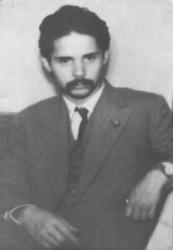
Nikolay Konshin
 Russia
- Fyodor Ivanovich Konshin
- Literary Debut and Delvig's Circle
- Philosophical and Allegorical Tendencies
- Anacreontic and Romantic Themes
- Literary Collaborations and Social Critique
- Historical Research and Literary Legacy
Fyodor Ivanovich Konshin
Early Life and EducationBorn into a noble family, Fyodor Ivanovich Konshin began his literary journey in 1820 with an acquaintance with Yevgeny Baratynsky. This pivotal connection led to his induction into the Free Society of Lovers of Russian Literature in 1821 and an association with the circle of Anton Antonovich Delvig.
Literary Debut and Delvig's Circle
Konshin's literary debut was marked by his epistle "To Baratynsky." Through Baratynsky, he encountered the influential Delvig's circle, a group of poets and writers who inspired his works, including "To Our Own" (1821) and "The Hike" (1822).
Philosophical and Allegorical Tendencies
In the mid-1820s, Konshin's poetry shifted towards philosophical meditation and allegory, often imbued with religious and mystical undertones. This shift was evident in his tale "The Master of the Magic Crystal" (1825) and "The West" (1826).
Anacreontic and Romantic Themes
Despite his philosophical leanings, Konshin also wrote anacreontic verse, such as the popular "Aria" ("Youthful Age, Enchanting"), immortalized as a romance by Alexander Gurilyov in 1826.
Literary Collaborations and Social Critique
In 1830, Konshin joined forces with Evgeny Rozen to create the almanac "Tsarskoe Selo," featuring works from the Delvig circle, including three poems by Alexander Pushkin. By the late 1830s and 1840s, Konshin's lyricism grew somber, reflecting a sense of social and personal disillusionment.
Historical Research and Literary Legacy
In the 1840s and 1850s, Konshin devoted himself to Russian history. He discovered and published the oldest known manuscript of the "Domostroy" code, known as the Konshin manuscript, which remains a valuable historical and textual resource. Konshin's literary legacy also includes memoirs about Delvig, Zhukovsky, and Baratynsky.