Nikolay Krapivyansky
- Early Life and Military Career
- Civil War and Revolutionary Activity
- Post-Civil War Career
- Repression and Later Life
Early Life and Military Career
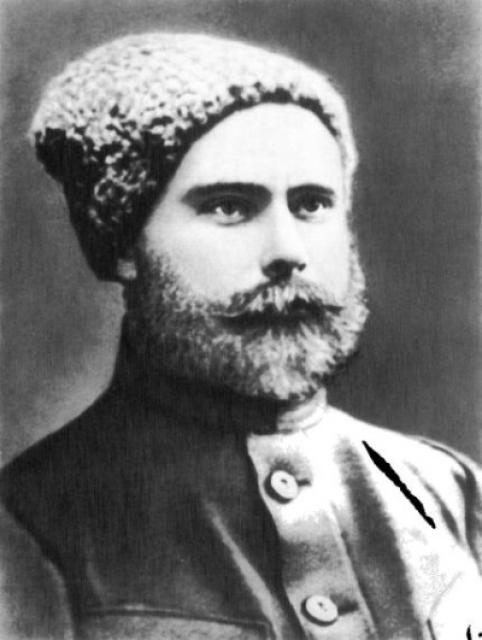
Nikolai Grigoryevich Krapivyansky was born in Volodykova Dyevitsa, Ukraine, on December 5 (17), 1889. His father was a wealthy Cossack village elder. Krapivyansky received his education at a rural school and later passed external exams to complete his high school education. In 1913, he graduated from the Chuguev Infantry Military College.
During World War I, Krapivyansky served on the Southwestern Front, where he fought in the 75th Sevastopol Infantry Regiment. He rose to the rank of lieutenant colonel and was decorated for his bravery. As a Bolshevik since February 1917, he actively engaged in propaganda work.
Civil War and Revolutionary Activity
After the Frontline Congress in May 1917, Krapivyansky was arrested and put on trial. In December 1917, he was elected commander of the 12th Army Corps and played a crucial role in suppressing Romanian and Austrian forces. In May 1918, he was appointed Commissioner for the Organization of the Central Military-Insurgent Headquarters in Ukraine.
As head of a partisan detachment, Krapivyansky fought against Austro-German occupiers. From September 1919 to January 1920, he commanded the 60th Rifle Division. In February 1920, he became Chief of Logistics for the 12th Army. Later, he commanded the 47th Rifle Division, which distinguished itself in battles against Denikin and Polish forces.
Post-Civil War Career
In the autumn of 1920, Krapivyansky was recalled from the Red Army and assigned to the Chernihiv provincial party organization. He served as head of the All-Ukrainian Cheka troops, combating armed opposition. Subsequently, he commanded the Cheka troops of Ukraine and Crimea.
In 1923, Krapivyansky's military career ended as an inspector of combat training for the Red Army Headquarters. He then worked on economic projects in the Caspian region and the Povolzhye. In 1933, he developed plans for partisan warfare in the event of a conflict with Germany.
Repression and Later Life
In 1937, Krapivyansky was arrested, expelled from the Communist Party, and sentenced to five years in a labor camp. After his release in 1943, he worked as a forester in Nizhyn, Ukraine. He later moved to Moscow but was forced to return to Nizhyn in 1948. He worked as a stableman in a hospital and died in Nizhyn. Krapivyansky was rehabilitated in 1956.