Nikolay Krylenko
- Early Life and Revolutionary Activity
- Pre-Revolutionary Engagements
- Rise to Prominence
- Legal Career and Role in Repressions
- Downfall and Legacy
Early Life and Revolutionary Activity
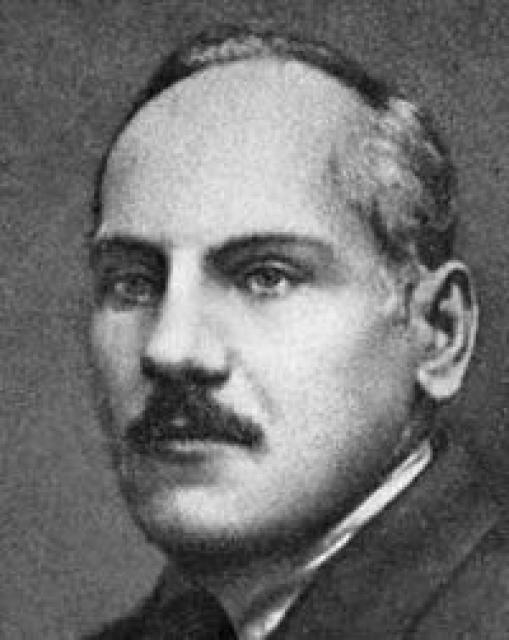
Nikolai Vasilyevich Krylenko was born to a revolutionary exile in Saint Petersburg, Russia. He received his education at Saint Petersburg Imperial University's Faculty of History and Philology in 1909 and later at Kharkiv Imperial University's Faculty of Law in 1914. Krylenko joined the Bolshevik Party in 1904, assuming the party alias "Abram."
Pre-Revolutionary Engagements
Krylenko actively participated in the 1905-1907 Revolution and faced numerous arrests. Although his punishments were generally limited to exile, he operated as an illegal revolutionary after 1906. In 1914, he went into exile in Austria and later Switzerland.
Upon his return to Moscow in November 1915, Krylenko was again arrested but released after the February Revolution. He resumed his Bolshevik activism among troops on the Southwestern Front, resulting in his arrest in July 1917 and subsequent release in September.
Rise to Prominence
On November 8, 1917, Krylenko was appointed a member of the first Council of People's Commissars as the Committee on Military and Naval Affairs alongside V. A. Antonov-Ovseenko and P. E. Dybenko. On November 12, 1917, he was made the Supreme Commander-in-Chief of the Red Army.
Krylenko's order to cease resistance and negotiate with the Germans without consulting the government was met with resistance. Nonetheless, he spearheaded negotiations that led to an armistice.
Legal Career and Role in Repressions
In March 1918, Krylenko transitioned to the judiciary, establishing revolutionary tribunals. He served as Chairman of the Supreme Tribunal from 1918, Prosecutor of the RSFSR from 1931, and eventually People's Commissar of Justice for the RSFSR and the USSR. Krylenko was responsible for organizing trials such as the Promparty Trial and the Shakhty Trial.
Downfall and Legacy
Despite his prominence, Krylenko faced criticism for his excessive focus on mountaineering and chess. In 1938, he was arrested and executed. He was posthumously rehabilitated in 1956 but later implicated in repressions following the publication of archival documents in the 1980s and 1990s.