Nikolay Nasibov
 Russia
Nikolay Nasibov: A Biography
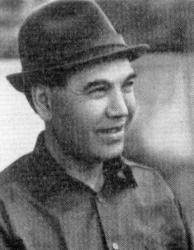
Nikolay Nasibov, a jockey and multiple-time champion of Europe and the USSR, was a renowned figure in the horse racing world. Born and raised in Kularsky Horse Farm, Nasibov began his career as a stable boy, eventually becoming an accomplished jockey of the 20th century. He was the only person in the world to win the Prix d'Europe three times. Nasibov's achievements in Russia were a source of pride and national heritage, winning 654 races within the country and 175 races abroad. Over a span of fourteen years, he competed in horse racing events in Berlin, Prague, Cologne, Warsaw, Stockholm, Washington, Oslo, and many other cities. Nasibov earned millions of rubles in gold for the Soviet Union during his racing career. Although Nasibov passed away four years ago, his memory remains alive in history.
On September 9, 2001, the Central Moscow Hippodrome hosted the Nikolay Nasibov Cup, which became the most prestigious award of the year in Russian horse racing history. It had the largest prize fund ever recorded in Russian racing, amounting to one million rubles. This event marked the beginning of a new era in the revival and development of horse racing in Russia. The weekly newspaper "Alphabet" sponsored the Nasibov Cup as an information sponsor.
Early Life and Career
Nasibov, who had a deep passion for horses since childhood, grew up as an orphan at the Kularsky Horse Farm. He started as a stable boy, eventually becoming an apprentice jockey. At the age of thirteen, in his first season at the Rostov Hippodrome in the spring of 1944, Nasibov impressed experts by winning 40 races. Realizing his potential, Nasibov knew he had to compete in Moscow. He presented his plans for the future to the head of the horse farm in Essentuki, who allowed him to ride the most spirited stallion for a test. Nasibov successfully passed the test, and with a wicker basket containing a crested chicken and a glowing professional recommendation safely tucked into his pocket, he set off for the capital, earning himself the title of the King of the Rostov Hippodrome.
Despite facing challenges, Nasibov maintained his determination and passion for racing. He was known for his ritual of consuming a raw egg in the morning and enduring hunger until lunchtime. He often joked that if he hadn't become a jockey, he would have become a cook. Nasibov struggled with weight throughout his racing career but managed it relentlessly, pushing himself to the limit.
Dmitry Urnov, a writer, literary critic, and horse enthusiast who was a close friend of Nasibov, noted his sentimental attachment to a historical chicken. Nasibov recalled, "When I arrived in Moscow, I had nowhere to release the chicken. I had to make a box for her and lock it. I kept the chicken until recently, but, of course, only for memory, as a symbol. I took her everywhere with me and faced many difficulties with customs officials because of her. One customs officer asked, 'Are you Robinson Crusoe?' I told him to come to the racecourse and see what kind of Robinson I am. 'And can you advise me on which horse to bet?' he asked. 'Bet on me, and you won't go wrong!' I replied." The public came to "watch Nasibov," and he garnered admiration not only from racing experts but also from people with no interest in horse racing. Professional horsemen referred to him as a once-in-a-century talent. A race lasts for 120 seconds of intense competition, where the jockey's skill, the horse's instinct, gentle hands, firm will, and intuition come into play. Nasibov worked with numerous horses throughout his jockey career.
Partnership with Anilin
Nasibov's most remarkable and special horse was Anilin, a chestnut Thoroughbred stallion born at the "Voskhod" stud farm. Their photographs circulated worldwide in the 1960s, and there was no better advertisement for foreign racetracks than the names Nasibov and Anilin. A true jockey sees the entire race. How many great racehorses lost in the final meters? And why? Nasibov never forgot to look back. Such forgetfulness was not an option for Nasibov. Despite Anilin's exceptional speed, foreign racehorses, whose selection was based solely on swiftness, could become unbeatable at the last moment. Nasibov had to use the endurance of his horse, leading the race while trying to exhaust his competitors. He had a technique of letting the horse rest before the final turn, as he led throughout the race, and then making a sudden burst forward after a few seconds. Horsemen referred to this move as the "iron message." It summarized the master's ability to extract the utmost speed and mobilize all the hidden reserves from the horse. Competitors, more often than not, could not withstand Nasibov's surge. The grandstands of the racetrack would hold their breath in anticipation and erupt in enthusiastic cheers when Nasibov made his move.
"There is no horse that can make two swift bursts over the entire distance," experts and horsemen believed. That was the case until Nasibov and Anilin arrived on the racing scene. In the spring of 1967, they competed for their third Prix d'Europe in Cologne. As always, Anilin took the lead in the race. Experts regarded Nasibov's tactics as futile and hopeless. The best horses on European racetracks, such as the Grand Prix winner at the Saint-Cloud racecourse, Luciano, and a French horse named Taneb, were left behind by Anilin. On the final stretch, Luciano closed in on Anilin threateningly and confidently. Nasibov seemed doomed, destined to lose. Then came the second surge! The famous Nasibov move. Anilin crossed the finish line first. Oscar Langen, Luciano's jockey, had no choice but to tip his hat. "Thrice crowned!" exclaimed newspapers worldwide about Anilin. Nasibov rode Anilin 27 times, winning 21 races and missing the podium only three times. The owners of the best international stud farms tried to buy Anilin, offering unimaginable prices. Nasibov retired from the racetrack in the prime of his career and dedicated his time to training the next generation of jockeys. As a trainer, he went on to win the Derby ten times, with the last victory in 1996 by a horse named Shavat. In 1997, at the age of 66, Nikolay Nasibov passed away, leaving behind a legacy of titles that were unimaginable for a Soviet jockey of his time and a talented group of students. His ultimate dream had come true: he wanted to be a jockey, and he became one, finding true happiness. Horses continue to race for the Anilin Prize and now the Nasibov Cup.
Despite Nasibov's aversion to trailing behind others, there will be no dust on the racetrack today. The rain firmly pressed it down, burying it in small puddles. The ground is muddy. Concerned photographers shelter their expensive cameras under umbrellas, not even considering it an honor to capture the moment when dirt splatters from the prize-winning hooves. The racing season in our region is short. In foggy Albion, which is worth mentioning on such a day, flat racing continues until mid-November. But let us be grateful that horse racing events are happening in the capital at all. In 1991, they were discontinued at the Central Moscow Hippodrome due to financial reasons and were only resumed at the turn of the millennium. Today, on the closing day of the first racing season of the 21st century, the Nikolay Nasibov Cup is being contested. Thanks to the support of sponsors (the commercial bank "Neftyanoy," the insurance company "Sibir," and the company "Patrik Hellman Collection"), the prize money for the top four horses is 500,000, 250,000, 150,000, and 100,000 rubles, respectively. Last year, the entire prize fund amounted to the sum now reserved for the third-place (paid) horse. Today, a million rubles has been put on the racetrack.
Experts from "Alphabet" have begun assessing the chances of the fleet-footed chestnut mare Artura from the "Voskhod" stud farm. By the way, she is trained by Alexander Chuguevets, the same trainer who worked with Nasibov. However, she is not the only worthy contender. The discussion comes to an end as the race begins. Jockey Vladimir Melekhov on Artura takes an early lead and maintains it for the first lap, the second lap... The distance is 3000 meters, a stayer's distance. Everything can still change. The main "chasing group" has increased its speed as they approach the final turn, especially the powerful surge of the bay horse, Brabus, ridden by Sergei Lavrikov. Brabus overtakes the front-runners and takes the lead. Artura races along the edge of the track, slightly splattering us with historical mud, and claims second place. All the leaders work together, urging their horses with their whips. But the horse with the number nine finishes swiftly, and from our vantage point, it is unclear whether Melekhov managed to catch up with him. It's the bell! "The ninth horse, followed by the fifth," someone in the regular crowd shares the information. Brabus has won by three lengths against Artura.
Fans of the winner consider his victory more than deserved, arguing that it is difficult for a mare to compete against a stallion, especially with Brabus' exceptional bloodline and prestigious foreign ancestry. The jockeys who took third and fourth place seem to share this sentiment (they are right next to the barrier, and we can clearly see their faces, gestures, and racing attire, stained with coffee-colored mud). Melekhov stands with a stone-cold, unnaturally tense face, clasping his hands behind his back and taking a deep breath before smiling and responding to a remark from his comrades. It is unlikely that he finds solace in the fact that even Anilin, on occasion, lost in the battle between "endurance riding" and "speed racing," and that "races are races." When a jockey enters the racetrack, he believes in himself, his horse, and his luck until the very end. The day this belief fades away, everything will come to an end - jockeys, horses, and racing. The Nasibov Cup, just like the Derby, can only be won by a horse once in a lifetime. Jockeys still have everything ahead of them.
Nevertheless, today Melekhov has already won the Prize in honor of the President of the Republic of Belarus on "Voskhod's" Rigodon. Now the celebration is taking place on the streets of the Abazinsky Horse Farm. Trainer Maksud Kantakuzin, also a student of Nasibov, joyfully shakes hands with friends and sponsors. Sergei Lavrikov, one of those who won the Derby with Nasibov as a trainer, is also present. The closing day of the first racing season in the third millennium has become a triumph for Nikolay Nasibov.