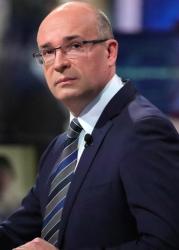
Nikolay Obleuhov
 Russia
- Pyotr Oblyukhov: A Leading Russian Monarchist
- Publishing Career
- Political Activism
- Contribution to Monarchist Ideology
- Nationalism and Class Conflict
- Literary Works
- Leadership during World War I
- Later Life and Legacy
Pyotr Oblyukhov: A Leading Russian Monarchist
Early Life and EducationPyotr Oblyukhov, also known by his pseudonym P. Ukhtobuzhskiy, was a prominent Russian writer, journalist, and political figure. Born into a noble family, the Oblyukhovs, he had deep roots in the Russian nobility. He received a higher education in law.
Publishing Career
At the turn of the 20th century, Oblyukhov became editor of several journals, including the political and literary magazine "Znamya" in Moscow, as well as "Selsky Vestnik" and "Domashnee Khozyaystvo."
Political Activism
From 1906 onward, Oblyukhov played a significant role in the right-wing monarchist movement. He edited several right-wing publications, including "Kolokol" and "Na Každyy Den Pravoslavnomu Khristianinu." He also served as the last editor of the "Vestnik Policii" until 1917.
As a member of the Russian Assembly (PC), Oblyukhov became actively involved in the Russian People's Union named after Michael the Archangel (RNSMA). By 1912, he was elected to the Union's Main Chamber and eventually rose to the rank of Deputy Chairman in 1914.
Contribution to Monarchist Ideology
Oblyukhov was a prominent right-wing publicist who frequently contributed to the RNSMA journal "Pryamoy Put." He penned several influential articles on monarchist ideology. In 1912, he published "Nashi Idealy i Russkaya Sovremennost," in which he criticized the government's lack of support for monarchists.
Nationalism and Class Conflict
Oblyukhov also advocated for resolving class conflicts between workers and factory owners through nationalism. He argued that foreign ownership and management often led to exploitation. Conversely, he believed that Russian factory owners had a sense of kinship with Russian workers, diminishing economic tensions.
Literary Works
In addition to his journalistic contributions, Oblyukhov authored several books published by the RNSMA. His book "Otmena Krepostnogo Prava (1861-1911)" enjoyed immense popularity, selling over 100,000 copies. "Russky Narod v Azii" examined the need for Russian settlement in Siberia and the threat of "yellow peril."
Leadership during World War I
With the outbreak of World War I, Oblyukhov became the de facto leader of the RNSMA during Vladimir Purishkevich's deployment to the army. He supported Purishkevich's position of avoiding collaboration with other right-wing organizations.
Later Life and Legacy
After the Russian Revolution of 1917, Oblyukhov's fate remains unknown. However, his wife, Sophia Oblyukhova (also known by the pseudonym Kuchinskaya), continued her involvement in the monarchist movement. Their son, Mark, a lieutenant in the anti-Bolshevik White Army, fell in battle in 1918.