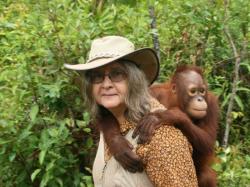
Nils Wiesel
 Sweden
Biography of Nils Wiesel
Nils Wiesel, a Swedish neurobiologist and neurophysiologist, was born in Uppsala, Sweden. He is best known as the co-recipient of the Nobel Prize in Physiology or Medicine in 1981.
Early Life and Education
Wiesel was born into a family of distinguished medical professionals. His father, Fritz S. Wiesel, was the chief psychiatrist at the Beckomberga Institute of Psychiatry in Stockholm, and his mother, Anna-Lisa (Bentzer) Wiesel, was also involved in the field of psychiatry. Wiesel grew up in Stockholm, where he attended a private school. He was an active student, particularly interested in sports, and considered himself somewhat lazy and mischievous. In high school, he captained the school's athletics team.
In 1941, Wiesel enrolled in the medical school at the Karolinska Institute in Stockholm. There, he worked in the laboratory of Carl Gustaf Bernhard, studying the function of the nervous system and gaining clinical skills in psychiatry. In 1954, Wiesel earned his medical degree from the Karolinska Institute and was appointed as a faculty member in the Department of Physiology and as an assistant in the Department of Child Psychiatry at the Karolinska Hospital.
Research Career
In 1955, Wiesel accepted an invitation to do a fellowship at the Wilmer Institute, where he worked under the guidance of Stefan Kuffler, a renowned expert in the field of neurophysiology of vision. Kuffler was continuing important research initiated by H. Keffer Hartline and Ragnar Granit. Two years later, Wiesel became an assistant professor of visual physiology at the Johns Hopkins Medical School.
During his time at the Wilmer Institute and later at Johns Hopkins, Wiesel and his colleague David Hubel conducted groundbreaking experiments on the visual system. They implanted tiny electrodes into the visual cortex of cats and monkeys, recording the spontaneous electrical activity of nerve cells. They studied the responses of these cells to visual stimuli, aiming to understand the principles of information processing in the brain.
One of their significant discoveries was the organization of the visual cortex into vertical columns, which they called "dominant ocular columns" and "orientation columns." These columns of nerve cells processed the information received from the retina, transforming circular receptive fields into linear ones. Wiesel and Hubel also revealed the hierarchical organization of simple, complex, and hypercomplex cells in the visual cortex. Their research provided insights into how the brain decodes visual signals and led to a better understanding of visual perception.
Awards and Later Career
In 1968, Wiesel became a professor of neurobiology at Harvard University, and in 1973, he succeeded Kuffler as the head of the Department of Neurobiology. In recognition of their groundbreaking discoveries, Wiesel and Hubel were awarded half of the Nobel Prize in Physiology or Medicine in 1981, with the other half going to Roger W. Sperry.
In 1983, Wiesel joined Rockefeller University as a professor of neurobiology, holding the Brooke Astor-Provost and Vincent Astor Distinguished Professorship. Throughout his career, Wiesel received numerous honors and awards, including the Lewis Rosenstiel Award for Distinguished Work in Basic Medical Research (1972), the John S. Friedenwald Award from the Association for Research in Vision and Ophthalmology (1975), the Carl Spencer Lashley Award from the American Philosophical Society (1977), and the George Ledlie Prize from Harvard University (1980). He was a member of several prestigious scientific societies, including the American Physiological Society, the American Philosophical Society, the American Association for the Advancement of Science, the National Academy of Sciences, the Physiological Society (UK), and the Royal Society of London.
Wiesel's research on the visual system has had a significant impact on the understanding and treatment of visual disorders, particularly congenital cataracts. He believed that early removal of such cataracts, while preserving the patient's vision, was crucial for proper visual development.
Wiesel was married to Teri Stenhammer in 1956, and they divorced in 1970. He later married Anne Yee, but they also divorced in 1981.