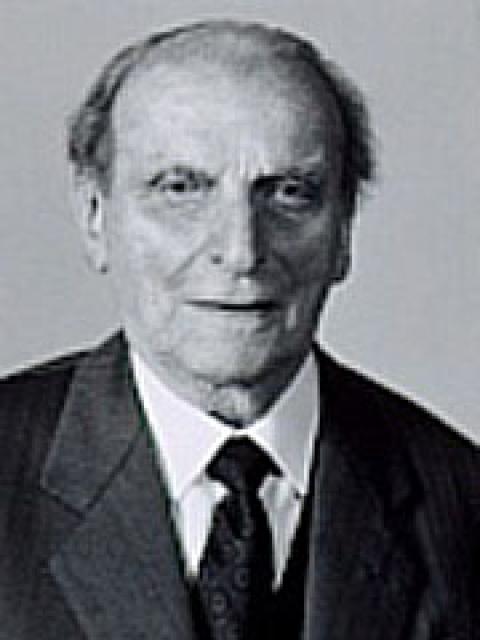
Norberto Bobbio
 Italy
Italy- Early Life and Education
- Academic Career and Early Political Affiliation
- Anti-Fascist Activism
- Liberal Socialist Politics
- Academic Success and Late Political Engagement
- Legacy and Death
Early Life and Education
Norberto Bobbio was born in Turin, Italy, on October 18, 1909, to a family of doctors. From an early age, he displayed a passion for music and literature. Bobbio enrolled in a classical high school, where he befriended renowned intellectuals Leon Ginzburg and Cesare Pavese. He went on to study law at the University of Turin and later pursued further studies in Marburg, Germany, where he encountered the philosophies of phenomenology and existentialism.
Academic Career and Early Political Affiliation
In 1928, Bobbio joined the fascist party, a common choice among young Italians during the era. Despite his initial adherence, he gradually became disillusioned with fascism. In 1933, he completed his dissertation on Edmund Husserl's philosophy. His first book, published in 1934, examined the phenomenological approach to legal and social philosophy.
Anti-Fascist Activism
As the grip of fascism tightened in Italy, Bobbio joined the anti-fascist resistance movement. In 1935, he became involved in the "Justice and Liberty" group. Although he was arrested, he managed to escape imprisonment by taking an oath of allegiance to fascism in 1939. However, this compromise allowed him to secure a professorship at the University of Siena.
Liberal Socialist Politics
In 1942, Bobbio joined the anti-fascist Party of Action, which advocated a form of liberal socialism inspired by Carlo Rosselli. He was arrested again in 1943 and spent several months in prison. After the war, Bobbio became a prominent figure in the postwar political landscape. He was elected to the Italian Parliament in 1946 and served as a member of the Constitutional Assembly that drafted the Italian Constitution.
Academic Success and Late Political Engagement
In 1948, Bobbio became professor of philosophy of law at the University of Turin. He also co-edited the journal "Philosophical Review." In the 1960s, he shifted his focus to political science and played a key role in establishing the Faculty of Political Science at the University of Turin.
In the latter years of his life, Bobbio became actively involved in left-wing politics. He joined the Democratic Party of the Left in 1996 and vehemently criticized the political regime of Silvio Berlusconi.
Legacy and Death
Norberto Bobbio died on January 9, 2004, in Turin. According to his wishes, he was buried in the town of Rivalta Bormida. Bobbio is widely regarded as one of the most influential Italian intellectuals of the 20th century. His work on law, philosophy, and politics continues to shape contemporary thought.


