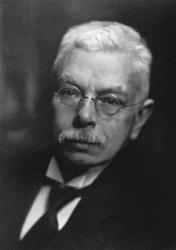
Norman Kroll
 USA
USA- Biography of Norman Kroll
- Early Career and World War II
- University of California, San Diego
- The Superconducting Super Collider
- Later Years and Contributions
- Personal Life and Legacy
Biography of Norman Kroll
Norman Kroll was an American theoretical physicist and a member of the National Academy of Sciences. He was born in Tulsa, Oklahoma. From 1938 to 1940, he attended Rice University in Houston and later transferred to Columbia University in New York City. It was at Columbia University where he earned both his bachelor's and doctoral degrees. His research focused on quantum electrodynamics, a field of physics that studies the properties of electromagnetic radiation and its interaction with charged matter in the context of quantum theory.
Early Career and World War II
During World War II, Kroll temporarily paused his research and worked on military radars along with other scientists. In 1949, he collaborated with his mentor Willis Lamb to publish the work "On the Self-Energy of a Bound Electron," which later became one of the selected papers on quantum electrodynamics. His research gained international attention, and he soon became a full professor of physics. His interests expanded to include electrodynamics, atomic physics, particle physics, free-electron lasers, and the development of particle accelerators.
University of California, San Diego
In 1962, Kroll was hired by the University of California, San Diego when the physics faculty was in its early stages of organization. By 1963, he became the chairman of the faculty. This rapid career growth was not surprising given his prior experience working with Nobel laureate Willis Lamb at Columbia University. In the 1980s, Kroll actively conducted research in various practical physics areas, focusing on the practical applications of different theoretical methods.
The Superconducting Super Collider
In the mid-1980s, Dr. Kroll assembled a committee of nine scientists to consider various proposed locations for the Superconducting Super Collider (SSC). The project initially started in Dallas, and the government spent $2 billion to construct a 54-mile-long oval tunnel. However, the project was only 20% complete when President Clinton signed a decision to terminate it. This decision was confirmed by a Senate committee vote, leading to the project's closure.
Later Years and Contributions
In 1991, Norman Kroll retired from teaching and became an emeritus professor. Even in retirement, he continued his research at the University of California and provided consultancy services to the Stanford Linear Accelerator Center, a national laboratory sponsored by the U.S. Department of Energy. At Stanford, Kroll helped develop the mathematical foundation for a new generation linear collider, a project of paramount importance for understanding the principles of particle interactions and the laws of nature as a whole. His frequent visits to the laboratory were only interrupted by multiple spinal fractures.
Personal Life and Legacy
Outside of academia, Kroll enjoyed attending operas, swimming in the ocean, taking long walks, and observing wildflowers. He passed away due to natural causes on August 8, 1994, at Thornton Hospital in La Jolla.