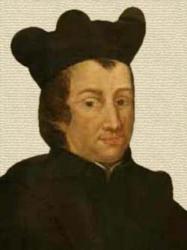
Pieter Zeeman
 Netherlands
- Pieter Zeeman: The Pioneer of Spectroscopy
- Academic Appointments
- Discovery of the Zeeman Effect
- Nobel Prize and Other Honors
- International Recognition
- Later Years and Legacy
Pieter Zeeman: The Pioneer of Spectroscopy
Early Life and EducationPieter Zeeman was born on May 25, 1865, in Zonnemaire, Netherlands. After completing his studies at Leiden University in 1890, he embarked on a teaching career.
Academic Appointments
In 1897, Zeeman became an associate professor at the University of Amsterdam. He subsequently rose to the ranks of professor in 1900 and director of the Physics Institute in 1908.
Discovery of the Zeeman Effect
In 1896, Zeeman conducted groundbreaking research on the spectrum of sodium vapor in the presence of a strong electromagnet. Using a high-resolution spectroscope, he observed that the yellow D-lines split into multiple components under magnetic influence. This discovery, known as the Zeeman effect, became a cornerstone of modern physics.
Nobel Prize and Other Honors
In recognition of his contributions to physics, Zeeman and Hendrik Lorentz were jointly awarded the Nobel Prize in Physics in 1902 for their investigation of the influence of magnetic fields on radiation. Zeeman was also bestowed with the prestigious Draper Medal and Rumford Medal.
International Recognition
Zeeman's scientific achievements earned him international acclaim. He was elected a Fellow of the Royal Society and a member of the French Academy of Sciences.
Later Years and Legacy
Pieter Zeeman continued to contribute to physics throughout his career. He passed away in Amsterdam on October 9, 1943, leaving behind a lasting legacy in the field of spectroscopy. The Zeeman effect remains a fundamental phenomenon in modern atomic physics and quantum mechanics.