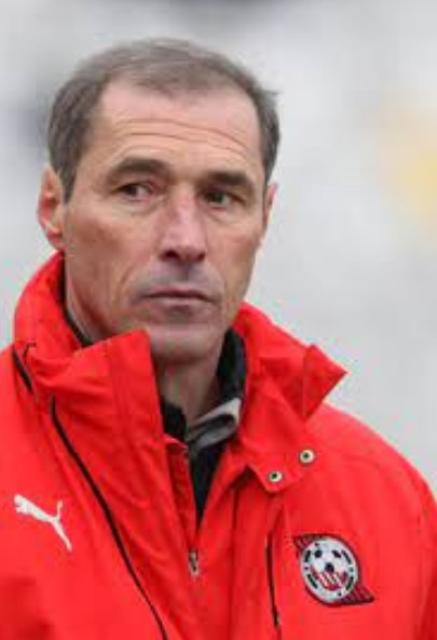
Oleg Taran
 Ukraine
Oleg Taran: Soviet Ukrainian Football Player and Coach
Oleg Taran is a former Soviet Ukrainian football player and coach. He was born in Ukraine and began his football career in 1969 at the age of 12, playing for the DYUSH (Ordzhonikidze) team. His first coach was N.A. Sharikov. Taran continued his training at the sports boarding school in Kiev from 1973.
Playing Career
Taran played as a forward and had an impressive career playing for various clubs. From 1977 to 1980, he played for Dynamo Kyiv before transferring to Chernomorets Odessa in July 1980. He also represented SKA Odessa in 1981-1982 and CSKA Moscow in 1982. Taran's longest stint was with Dnipro Dnipropetrovsk, where he played from 1983 to 1988 and returned for a brief period in 1994 from September onwards. He also played for Metalurg Zaporizhia in 1989, 1990 (from August), and 1991 (from July), as well as VAK Casablanca in 1990 (until July), and Tsafririm Holon in 1991 (until May). Taran had short spells with Markaryd in Sweden from July to October 1992 and Ettlingen in Germany from 1993 to 1994 (until May).
During his career in the Soviet Union, Taran played in 188 matches and scored 48 goals. His goal tally includes 134 goals for Dnipro, 21 goals for CSKA Moscow, 15 goals for Chernomorets Odessa, 12 goals for Metalurg Zaporizhia, and 6 goals for Dynamo Kyiv. In European competitions, he played 14 matches and scored 2 goals, with 1 goal in the European Cup and 1 goal in the UEFA Cup.
Playing Style and Achievements
Taran was known as a skilled player who excelled in dribbling and had a unique ability to make unconventional decisions in attack and goal-scoring opportunities. However, he had some weaknesses, particularly in his off-the-ball movement, which prevented him from fully realizing his potential.
Despite his talent, Taran's career was marred by a serious injury in 1988, which limited his playing time to only four matches that season. As a result, he was unable to win the Soviet championship that year and did not receive a medal.
After retiring from professional football, Taran turned to coaching. He has since worked as a coach, sharing his knowledge and experience with younger generations of players. Taran's contributions to Ukrainian football, both as a player and a coach, have left a lasting impact on the sport.


