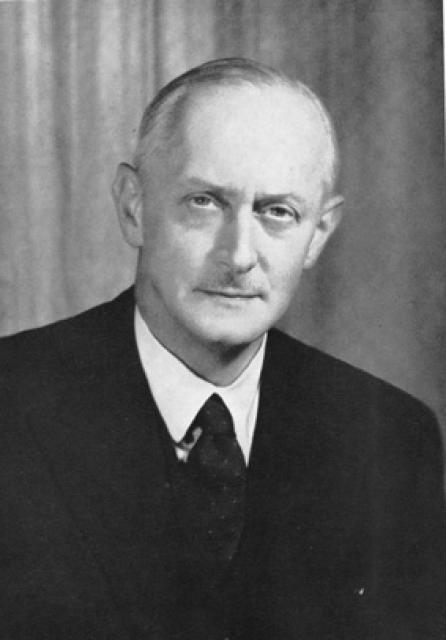
Oliver Sheldon
 USA
USA- Biography of Oliver Sheldon
- A Human-Centered Approach to Management
- Implementation of Ethical Principles
- Philanthropic Work
- The Philosophy of Management
Biography of Oliver Sheldon
Director of Rowntree CompanyOliver Sheldon was one of the directors of the confectionery company, Rowntree Company, located in York, United Kingdom. He managed the company in the 1920s and actively participated in the labor organization and restructuring of the growing confectionery company. At that time, the company needed to transition from a personal, family approach to management, established by the founder, Joseph Rowntree, to a more professional manner. Under the chairmanship of Benjamin Seebohm Rowntree, Joseph's son, the company adopted Sheldon's proposals for a more functional organizational style. However, Sheldon successfully combined the new approach with the belief shared by the senior executives of Rowntree that industry exists not only for the benefit of shareholders.
A Human-Centered Approach to Management
Sheldon believed that good management goes beyond a set of tried and tested techniques and is primarily based on human understanding. He stated that leading people requires patience, courage, and, above all, compassion. He believed that the motivation and fundamental basis of industry should be serving society. Sheldon's views diverged from many of his contemporaries, such as the American economist Frederick Winslow Taylor, who considered economic necessity as the primary motivation for workers. Sheldon was ahead of his time, asserting that while basic economic needs must be met, personal and societal needs are equally important.
Implementation of Ethical Principles
At the Rowntree factory, these principles were implemented through various measures. The management ensured that workers received fair wages and had decent working conditions. They also provided necessary consultations and involved employees in solving workplace issues. These measures worked towards improving work efficiency. Both the company and the directors actively participated in various public works, often motivated by their strict religious and liberal political beliefs.
Philanthropic Work
In 1904, Joseph Rowntree transferred half of his personal estate and almost two-thirds of the company's shares to the three York-based charitable trust funds: Joseph Rowntree Charitable Trust, Joseph Rowntree Foundation, and Joseph Rowntree Reform Trust. These funds continue their charitable and socio-political work to this day. Despite finding new paths for change and development over time, such as the introduction of new brands and marketing in the 1930s and the acquisition by Nestlé Corporation in 1988, Rowntree Company has preserved the traditions of good management in accordance with the philosophy of its founder and his closest associates.
The Philosophy of Management
Sheldon explored the intertwining of business and ethical standards in his book "The Philosophy of Management," published in 1924. As a religious person, he illustrated his beliefs with a vivid metaphor, stating that the value of building the Kingdom of Heaven cannot be found in industrial profit and loss reports, but is solely measured by the conscientious work of each individual.


