Ortensio Paravisino
 Spain
Spain- Horacio Félix Paravicino: Orator, Poet, and Ecclesiastical Reformer
- Monastic Life and Theological Studies
- Royal Preacher
- Literary Connections
- Cultist Style
- Revolutionary Ecclesiastical Oratory
- Decline of the Tradition
Horacio Félix Paravicino: Orator, Poet, and Ecclesiastical Reformer
Early Life and EducationHoracio Félix Paravicino was born into a noble Milanese family of the Pallavicini lineage. He began his education at the Jesuit college in Alcalá de Henares, later studying civil and canon law at the University of Salamanca.
Monastic Life and Theological Studies
In 1600, Paravicino joined the Trinitarian Order, becoming a prominent provincial within the organization. As a young man, he held a chair of rhetoric at the university and obtained a doctorate in theology in 1603.
Royal Preacher
At the age of 36, Paravicino became the official court preacher to King Philip III. His funeral oration for the king in 1621 introduced new rhetorical nuances in ecclesiastical preaching,引发 debate. He continued in this role under King Philip IV.
Literary Connections
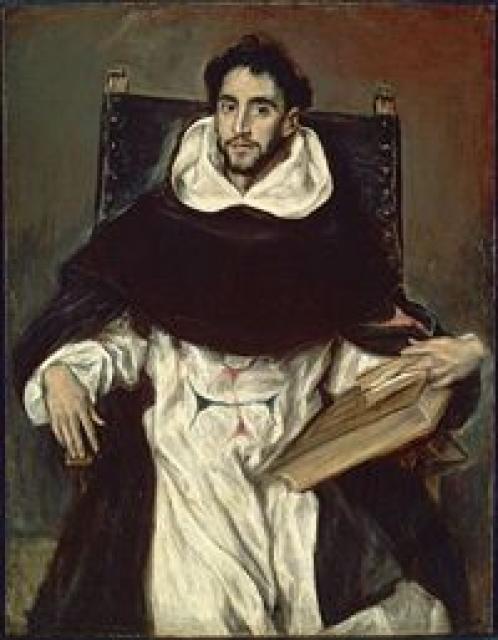
Paravicino was a key figure in the Golden Age of Spanish literature, associated with renowned figures such as Lope de Vega, Luis de Góngora, and Francisco de Quevedo. His closest friend was the artist El Greco, who painted his portrait in 1609.
Cultist Style
Paravicino's literary pursuits were influenced by the cultist movement, characterized by its emphasis on embellished, obscure, and metaphorically rich language. He excelled as a poet, notably writing four sonnets dedicated to El Greco, and also explored the realm of drama.
Revolutionary Ecclesiastical Oratory
Paravicino's most significant contribution was to introduce a new style of ecclesiastical oratory. He infused sermons with intricate metaphors and a grandiloquent tone characteristic of baroque poetry, transforming preaching into a literary genre. His collected sermons, published in six volumes, became highly influential and set the benchmark for oratory for decades.
Decline of the Tradition
By the mid-18th century, Paravicino's tradition had fallen into disfavor. His verbose sermons became a target of Enlightenment ridicule, culminating in the satirical novel "Brother Gerund" by Padre Isla.