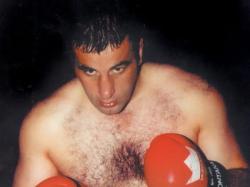
Oscar de la Hoya
 USA
USABiography of Oscar De La Hoya
When the American team arrived in Barcelona for the 1992 Olympics, all attention was drawn to a tall, skinny, and handsome boy with sad eyes. He stood out among the other boxers with his shy nature, but when approached, he would respond with a sincere and radiant smile. Within two weeks, this boy saved the American team from disgrace by winning the only gold medal in the lightweight division. The world remembered his name - Oscar De La Hoya, his eyes, and his charming smile.

Despite doubts from boxing promoters and sports critics, De La Hoya was given a chance in the professional boxing world due to his popularity after the Olympics. He earned $200,000 for his first professional fight, almost as much as the world champion in his weight class. Although many believed he wouldn't become a champion, De La Hoya proved them wrong.

De La Hoya became a hero on various talk shows, attracting people who were not interested in boxing. His unconventional behavior and ability to connect with the audience brought in a large following. He became known as the Golden Boy, and his fights garnered a huge audience.

De La Hoya's career reached new heights as he showcased his talent both inside and outside the ring. He was known for his business acumen and his ability to maximize profits while minimizing risks. He strategically fought only when the public was willing to pay the highest price for the spectacle. He also fought outside of his weight class, using his physical advantages to his benefit.

De La Hoya knew how to say what the audience wanted to hear. His smile and charismatic personality allowed him to get away with many actions that would have been criticized if done by other boxers. He became a phenomenon in popular culture, ranking higher on Forbes' list of most famous Americans than other boxers.

However, critics began to question De La Hoya's choice of opponents, claiming he avoided fighting anyone who posed a real threat to him. Despite these doubts, he remained popular among the general public. He faced a strong opponent, Ike Quartey, in his first challenging fight, and while many thought Quartey had won, De La Hoya emerged victorious. After the fight, he stated that it was not very interesting and that he would not have a rematch with Quartey.
De La Hoya's popularity continued to rise until his loss to Felix Trinidad in March 2000. The boxing community wanted a rematch, but De La Hoya refused, distancing himself from the boxing establishment. However, the general audience was satisfied with his performance against a strong opponent, and the judges declared him the winner.
De La Hoya's career was not just about boxing; it was about capturing the hearts of people. Despite criticism, he remained a beloved figure, an embodiment of good in a sport often associated with violence. His smile and charm made him a true icon in popular culture.