Oskar Hutier
 Germany
- Oscar von Hutier: A Leading General of World War I
- Early Career and Training
- Return to the General Staff
- World War I on the Western and Eastern Fronts
- The Hutier Offensive
- Post-Capture of Riga
- Western Front and Retirement
Oscar von Hutier: A Leading General of World War I
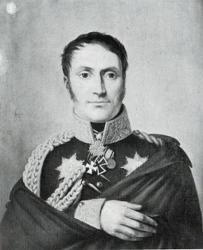
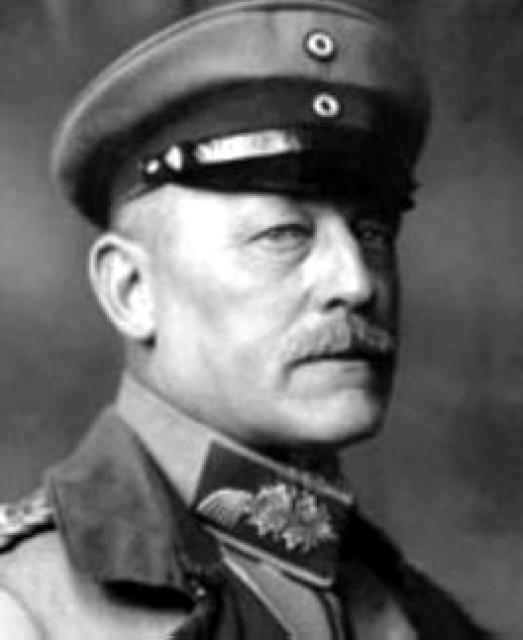
Oscar von Hutier, a German infantry general, gained recognition as one of the most effective German generals of World War I for his innovative tactics in breaking through the positional stalemate on the Western Front.
Early Career and Training
Born in Erfurt, Saxony, on August 27, 1857, Hutier joined the German Army as a lieutenant in 1875. He attended the War Academy from 1885 to 1888 and received an appointment to the General Staff in 1889. In 1890, he commanded a battalion in the 95th Infantry Regiment.
Return to the General Staff
After working in the General Staff in 1902, Hutier became the Chief of Staff of the 3rd Army Corps in the same year. In 1907, he commanded the Leib Guard 1st Hessian Regiment. In 1910, he assumed command of the 74th Infantry Brigade. By 1911, he had become the Quartermaster General of the Great General Staff, while simultaneously lecturing at the War Academy. On September 16, 1912, Hutier was appointed to lead the 1st Guard Infantry Division, which he commanded at the outbreak of war.
World War I on the Western and Eastern Fronts
During the early stages of World War I, Hutier's division fought on the Western Front as part of the 2nd German Army. He participated in the battles of the Marne. On April 3, 1915, he became commander of the 21st Army Corps in the 10th Army, transferring to the Eastern Front.
Under Hutier's command, the corps engaged in military operations against the Russian Army in Poland and Lithuania. On January 2, 1917, he took command of Army Group D (Dyneburg) near Riga.
The Hutier Offensive
On April 22, 1917, Hutier was appointed commander of the 8th Army. On September 1, 1917, he launched an operation to capture Riga. In the crossing of the Western Dvina River, Hutier employed his innovative tactics, using a brief chemical shell bombardment instead of prolonged artillery preparation. His troops successfully crossed the river and established a foothold on the opposite bank. On September 3, the Russians evacuated Riga, which was then occupied by the 8th Army.
During the Riga operation, Hutier's forces captured 15,000 prisoners, 273 artillery pieces, and 246 machine guns. For his successful capture of Riga, Hutier was awarded the Pour le M?rite.
Post-Capture of Riga
After taking Riga, Hutier was given overall command of the operation to seize the Moonsund Islands. The German troops captured the islands in a landing operation, but the German navy suffered significant losses. The idea of breaking into the Gulf of Finland was subsequently abandoned.
Western Front and Retirement
Following the armistice with Soviet Russia on December 21, 1917, Hutier was appointed to command the 18th Army on the Western Front. His forces held positions near St. Quentin. During the German spring offensive in 1918, the 18th Army played a supporting role, covering the left flank. On March 21, 1918, German troops launched an offensive. Hutier's army penetrated the enemy defense line by 6-7 km on the first day of battle. They later broke through the 5th British Army, advanced 20 km, and crossed the Somme. On March 27, Hutier's troops captured Montdidier, but stiff resistance from Allied forces slowed the German advance, and the operation was suspended on April 5.
After World War I, Hutier retired from the army. He passed away on October 12, 1934, in his birthplace of Erfurt. Hutier's innovative tactics in breaking through the positional stalemate on the Western Front earned him a reputation as one of the most successful German generals of the war.