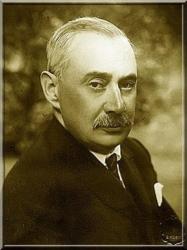
Oskar Luts
 Estonia
Biography of Oskar Luts
Oskar Luts was an Estonian writer, playwright, and pharmacist. He was born on January 7, 1887, into a middle-class family in Järvepera, Estonia, which was part of the Russian Empire at the time. His younger brother, Theodor Luts, became a director and cinematographer.

Luts attended Ankküla village school in 1894 and then the Palamuse parish school in the Jõgeva district from 1895 to 1899. He later studied at the Tartu Real School from 1899 to 1902. Luts began his apprenticeship as a pharmacist in Tartu and Narva in 1903. After passing all the necessary exams, he obtained a pharmaceutical specialty in Tallinn.

During his military service from 1909 to 1911 in Saint Petersburg, Luts continued to work in the field of pharmacy. He also pursued higher pharmaceutical education while working in Dorpat. When World War I broke out, Luts was conscripted into the Russian army and served as a military pharmacist in Pskov, Warsaw, Daugavpils, Vilnius, and Vitebsk from 1915 to 1918. It was in Vitebsk that he met his future wife, and they got married there. After being discharged from military duty due to health reasons in the autumn of 1918, Luts returned to Tartu with his family in the same year. He resumed his career as a pharmacist.

In 1919 and 1920, Luts worked at the university library and later managed a store. In 1922, he began his professional career as a writer. In 1936, Luts moved to a house on Riiav Street in Tartu, which was converted into a museum in 1964. He became the first Estonian writer to be awarded the title of People's Writer of the Estonian SSR in 1945.
Luts passed away on March 23, 1953, in Tartu. Several streets and buildings in Estonia bear his name, and a general education high school, Palamuse Gymnasium Oskar Luts, in Palamuse, is named in his honor.
Oskar Luts' Literary Works
Luts wrote his most successful literary work, the debut novel "Summer," which was written in a simple and vivid style, specifically for a wide audience. Later in his career, Luts shifted to a darker writing style, which affected his popularity.
His first novel, "Spring" ("Kevade"), was published in two parts in 1912 and 1913, respectively. It introduced readers to the characters who later appeared in the sequel novel "Summer" ("Suvi"), which was also published in two parts in 1918 and 1919. Both of these novels were highly successful. However, the subsequent sequels, "Toots' Wedding" ("Tootsi pulm, Argipäev") and the first part of "Autumn" ("Sügis"), did not garner the same level of interest from the public as the first two novels. The second part of "Autumn" remained in manuscript form for several decades before being published in 1988.
Luts also wrote children's literature, and his most successful children's book, "The Goblin" ("Nukitsamees"), published in 1920, served as the basis for a musical film of the same name in 1981. The film's music was composed by Olav Ehala.
As a playwright, Luts gained recognition for his play "The Cabbage Head" ("Kapsapea"). An animated short film titled "Cabbage Head" was made in 1993 based on his play. The film tells the story of a large cabbage growing in an Estonian family's garden and received wide acclaim in the United States, Russia, and China.
Luts' works have been translated into many languages and have left a lasting impact on Estonian literature and culture.