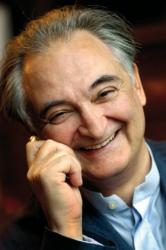
Ota Sik
 Czech
Czech- Biography of Ota Šik
- Early Life and Education
- Political Career and Economic Reforms
- Prague Spring and Exile
- Later Life and Legacy
Biography of Ota Šik
Ota Šik was a Czech economist and politician who played a crucial role in the introduction of the New Economic Model, a plan to liberalize the economy. He was also one of the key figures during the events of 1968 known as the Prague Spring. Šik was born on September 11, 1919, in the industrial city of Plzeň, Czechoslovakia.

Early Life and Education
Before World War II, Šik studied art at Charles University of Prague. After the war, he pursued a degree in political science. In 1939, when Nazi Germany annexed Sudetenland and divided the country, 19-year-old Šik joined the Czech Resistance movement. He was arrested by the Gestapo in 1940 and sent to the Mauthausen-Gusen concentration camp. Among his fellow prisoners were Antonín Novotný, the future president of Czechoslovakia, and Štefan Dubček, the father of Alexander Dubček, who later led the Prague Spring. The connections Šik made during his time in the camp proved to be surprisingly useful for his post-war political career.
Political Career and Economic Reforms
In the early 1960s, Šik attempted to convince President Novotný, a rigid man, to loosen his grip on centralized planning, which was undoubtedly harming the Czech economy. As a professor of economics and a member of the Communist Party, Šik wanted to introduce elements of a market economy into the central planning system to alleviate price controls and support private entrepreneurship in hopes of revitalizing the stagnant economic climate. Around the same period, Šik was elected to the central committee of the party and became the head of the Economic Institute at the Czech Academy of Sciences.
The reforms initiated by Šik began in 1967, before Dubček came into power, but were heavily undermined by party bureaucrats who feared losing control over factories. One of the most significant and popular outcomes of the reforms was the emergence of private taxis on the streets of Prague. In December 1967, Šik publicly denounced the Novotný regime during a party meeting preceding Dubček's subsequent takeover. He called for substantial changes in the communist system and the election of new leadership, twenty years before Mikhail Gorbachev declared that economic reforms could not be separated from radical political changes. By this time, Czechoslovakia had the lowest standard of living among the Soviet bloc countries, whereas it previously served as the economic backbone of the Habsburg Empire.
Prague Spring and Exile
In April 1968, Šik became the Deputy Prime Minister and the architect of the economic part of Dubček's action program. He later claimed that if the country had followed the program he developed, its economy would have caught up with neighboring Austria within four years. However, these plans were thwarted when Soviet tanks entered Prague. At the time, Šik was on vacation in Yugoslavia and, fearing arrest, he did not return to his homeland. Soviet propaganda labeled the progressive economist as an "agent of American imperialism." In October 1968, Šik found refuge in Switzerland. He returned to Prague in 1969 and attempted to persuade his colleagues but his views were rejected.
Later Life and Legacy
Šik settled in Switzerland and became a professor of economics at the University of St. Gallen. He retired in 1990. After the Velvet Revolution, Šik became an economic advisor to the President of the Czech Republic but had little influence on actual economic policies. He obtained Swiss citizenship and spent the rest of his life there. Ota Šik passed away on August 22, 2004.