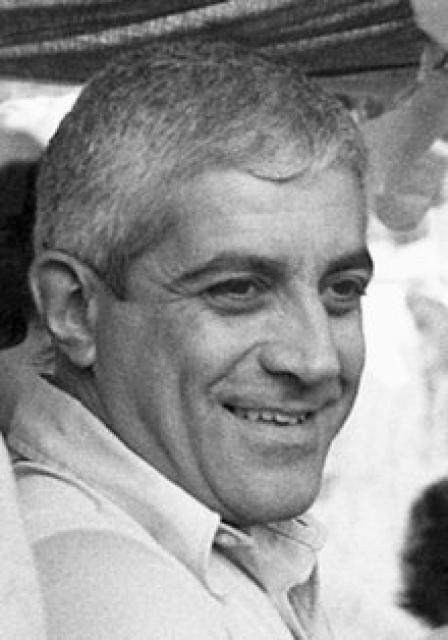
Otelo Nuno Romao Saraiva de Carvalho
 Portugal
- Early Life and Military Career
- Revolutionary Activities
- Military Leadership and Controversies
- Conflict and Political Turmoil
- Later Political Career
- Personal Life and Legacy
Early Life and Military Career
Otelo Saraiva de Carvalho was born in Lourenço Marques, Mozambique, the son of Eduardo Saraiva de Carvalho and Fernanda Áurea Regado Roman. After graduating from high school, he attended the Military Academy in Lisbon at the age of 19. In 1961, he was deployed to Angola as a second lieutenant, where he served until 1963.
Revolutionary Activities
In 1973, Carvalho joined the clandestine "Movement of Captains," which was instrumental in orchestrating the "Carnation Revolution" of April 25, 1974. He played a crucial role in the military uprising, leading to the overthrow of the authoritarian regime.
Military Leadership and Controversies
Following the revolution, Carvalho became deputy commander of COPCON (Operational Command of the Continent). Promoted to brigadier general, he played a key role in suppressing the military coup attempt of March 11, 1975. However, his controversial statement that all "counter-revolutionaries" should have been executed after the 1974 coup sparked public outrage.
Conflict and Political Turmoil
In August 1975, Carvalho publicly withdrew his support for Prime Minister Vasco Gonçalves and called for his resignation. This led to his removal from the Lisbon military command and the dissolution of COPCON. He was subsequently arrested in January 1976 but was released shortly after.
Later Political Career
In 1984, Carvalho was arrested again on suspicion of terrorism and was sentenced to 18 years in prison in 1985. After several years in custody, he was pardoned in 1996. During the 2011 financial crisis, he expressed regret over the revolution, but later clarified that he was still proud of his involvement.
Personal Life and Legacy
Carvalho was married to Maria Dina Afonso Alambre from 1960 until her death in 2021. He also had a civil relationship with Maria Filomena Morais. He authored two books, "Dawn in April" and "The First Day." Carvalho was decorated with the Grand Cross of the Order of Liberty in 1983. He is remembered as a controversial yet influential figure in Portuguese history.


