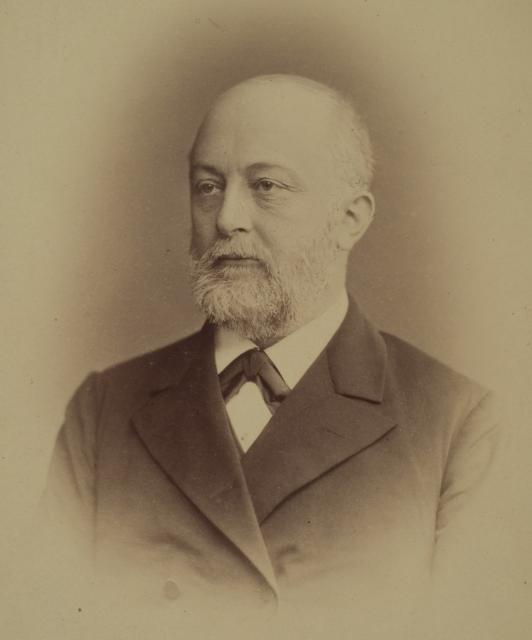
Otto Karlowa
 Germany
Otto Karlowa devoted his career to making the legal world of ancient Rome intelligible to modern scholars. A German jurist and legal historian, he taught Roman law for decades at Heidelberg and produced a landmark, two-volume history of Roman law. His work traced the rules and institutions that shaped Roman public life, private relationships, and legal procedure, helping later generations see how deeply Roman ideas were woven into European law.
From legal practice to the university
Karlowa was born in Bückeburg on February 11, 1836. He studied law and history at several German universities, including Göttingen, Berlin, Jena, and Bonn. After passing his first state examination, he worked as an auditor in Bückeburg before returning to academic life. He earned his doctorate and qualified to teach at the University of Bonn, where he began publishing research on Roman civil procedure.
In 1867, Karlowa became a full professor at the University of Greifswald. Five years later, he moved to Heidelberg, where he taught Roman law and civil procedure. His work combined close reading of legal sources with broad historical questions: how legal systems developed, how people conducted lawsuits, and how rules around marriage, property, and contracts changed over time.
A major history of Roman law
Karlowa’s early studies established his reputation. Beiträge zur Geschichte des römischen Zivilprozesses examined the history of Roman civil proceedings, while Die Formen der römischen Ehe und Manus explored marriage and the legal authority exercised within Roman households. He also studied how Roman law was received in German territories, including the Palatinate, and wrote about the legal act and its effects.
His most ambitious project was Römische Rechtsgeschichte, published in two volumes in 1885 and 1901. The work covered Roman constitutional law, legal sources, private law, civil procedure, criminal law, and criminal procedure. It remained incomplete, but its breadth and careful scholarship made it an important reference in legal history. By setting Roman law within its social and political setting, Karlowa helped scholars understand the system as a living institution rather than a static list of rules.
A lasting academic influence
Karlowa spent much of his professional life in Heidelberg, teaching students and contributing to the study of Roman law at a time when historical legal scholarship was flourishing in German universities. His research remains associated with a generation of scholars who treated law as something shaped by changing institutions and customs across centuries.
He died in Leipzig on January 3, 1904. More than a century later, his books continue to appear in university and research-library collections. The scale of his work, especially the unfinished but substantial Römische Rechtsgeschichte, secured his place among the leading German historians of Roman law.


