Otto Lambsdorff
 Germany
Biography of Otto Lambsdorff
Otto Lambsdorff, a German political figure, was born into a family that had already lost its noble status. However, this did not prevent him from achieving impressive success in politics and even becoming the Minister of Economics of West Germany. Otto was born in Aachen, Rhineland, to Herbert Graf Lambsdorff and his wife Eva von Schmidt. He spent some time studying in Berlin and Brandenburg an der Havel before becoming an officer candidate in the Wehrmacht. In April 1945, during an unexpected attack by allied forces, Lambsdorff was seriously injured, resulting in the loss of a part of his left leg. He remained a prisoner of war until 1946.
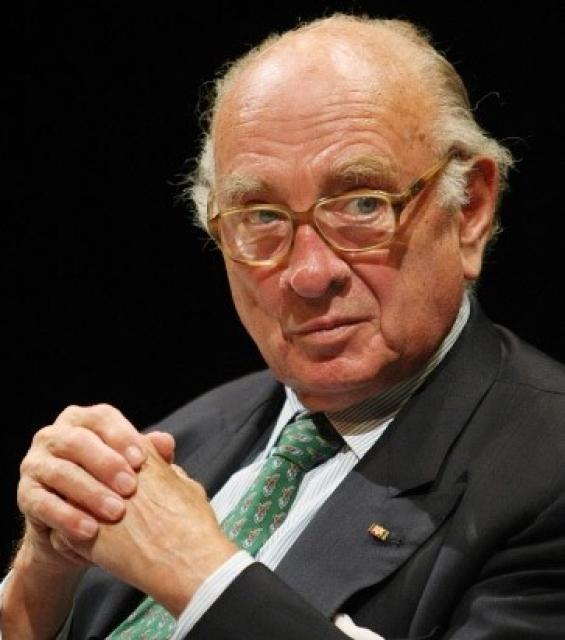
After the war and his release from captivity, Lambsdorff resumed his studies. He studied law at the universities of Bonn and Cologne, eventually obtaining a doctorate. In 1951, he became a member of the Free Democratic Party of Germany (FDP). From 1972 to 1998, he represented the FDP in the Bundestag, and from 1988 to 1993, he served as the party's chairman. Both within the party and beyond, Lambsdorff was known as an active supporter of liberal market principles, earning him the nickname "market count" - a play on words combining "market" and "count".

Lambsdorff served as the Minister of Economics of West Germany from 1977 to 1982 and from 1982 to 1984. However, he was forced to resign from his post due to the so-called "Flick affair", in which he was accused of accepting bribes from the German conglomerate Flick. This was not the last legal conflict Lambsdorff faced. On February 16, 1987, he was convicted of tax evasion.

In 1999, Lambsdorff became the official representative in negotiations regarding compensation for victims of German labor camps during World War II in Germany. This led to the establishment of the "Remembrance, Responsibility and Future" fund. Lambsdorff was also a member of the scientific advisory board of the "Centre Against Expulsions" and served on the jury for the prestigious "Franz Werfel Human Rights Award". Additionally, he held the honorary presidency of the Liberal International.
Under Lambsdorff's leadership, the Free Democratic Party of Germany underwent a noticeable shift in the early 1980s. He steered the party towards supporting pro-market principles, which included a shift away from Keynesian emphasis on consumer demand, reduced spending on social needs, and the activation of political measures aimed at increasing production levels and creating new jobs. Not everyone agreed with these principles, and as a result, the party lost some ground in parliament.
The Lambsdorffs were an ancient and noble dynasty originating from Westphalian aristocrats. However, for the past few centuries, the family resided mainly in the Baltic countries, maintaining close relations with Russia. It is known that Otto's father once served as a cadet in Saint Petersburg, and the former Russian Foreign Minister Vladimir Lambsdorff was not just a namesake but a relative. The word "Graf" (Count) in Lambsdorff's full name once had an official noble title and was placed before the name, but it became part of the surname after the abolishment of noble privileges in 1919.