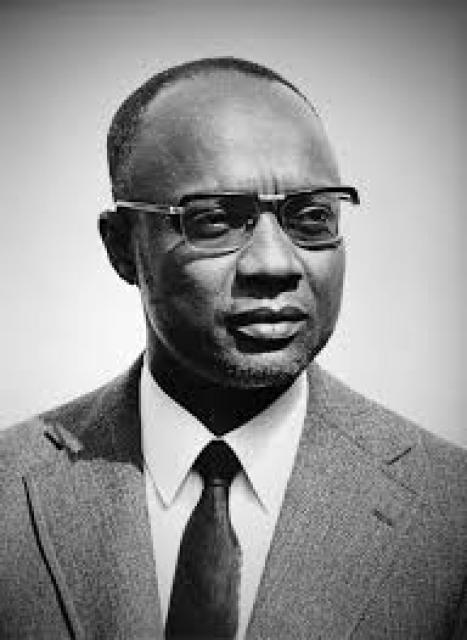
Amilcar Cabral
- Amílcar Cabral: Revolutionary Leader and Nation Builder
- Nationalist Activism
- International Recognition
- Tragic Death
- Legacy and Impact
Amílcar Cabral: Revolutionary Leader and Nation Builder
Early Life and EducationAmílcar Cabral was born on September 12, 1924, in the town of Bafatá, Portuguese Guinea (now Guinea-Bissau). His father, Vasco Cabral, was a civil servant and plantation owner. Cabral's name was inspired by Hamilcar Barca, the father of the Carthaginian general Hannibal. As residents of Cape Verde, the Cabrals enjoyed privileged status in the colony and were legally considered Portuguese citizens.
Cabral completed his secondary education at the Lyceum of São Vicente and later obtained an agricultural engineering degree from the Higher Agronomy Institute in Lisbon, Portugal. Despite respecting Portuguese culture, Cabral famously remarked, "The Portuguese language is the best thing the Portuguese left us."
Nationalist Activism
In 1948, Cabral joined the nationalist movement against Portuguese colonization. In 1956, he became the leader of the African Party for the Independence of Guinea and Cape Verde (PAIGC). From January 1963, Cabral served as Chairman of the Military Council of Revolutionary People's Armed Forces (FARP).
By 1967, PAIGC controlled up to 80% of Portuguese Guinea, marking one of the most significant military defeats for Portugal in its colonial wars. Cabral emphasized the importance of discipline and respect for the civilian population among his soldiers.
International Recognition
Cabral represented PAIGC at the 23rd and 24th Congresses of the Communist Party of the Soviet Union and established close ties with other international liberation movements. He became an influential figure in the global anti-colonial struggle.
Tragic Death
On January 20, 1973, Cabral was assassinated in Conakry, Guinea, while returning home from an official reception at the Polish embassy. The perpetrators were later identified as former students of PAIGC's training center who had been recruited by Portuguese intelligence.
Legacy and Impact
Cabral's death did not halt the anti-colonial movement. In 1973, Portuguese Guinea gained independence and became Guinea-Bissau. Portugal's failures in Guinea ultimately led to the overthrow of the fascist regime in the mainland and the recognition of independence for its colonies.
Cabral is remembered as a visionary leader, a skilled diplomat, and a brilliant strategist. His writings on the national liberation struggle continue to inspire activists and scholars worldwide. In acknowledgment of his contributions, a square in Moscow and a football cup in Africa bear his name.


