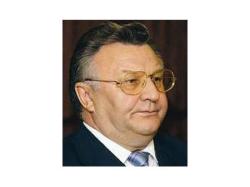
Otto Niemeyer
 Great Britain
- Biography of Otto Neimeyer
- Work at the Bank of England
- Role in Australian Financial Crisis
- Visit to Australia
- Controversy and Criticism
- Legacy
Biography of Otto Neimeyer
Early Life and EducationOtto Ernst Neimeyer was born in 1833. He attended St. Paul's School and Balliol College, Oxford, before starting his career at Her Majesty's Treasury.

Work at the Bank of England
In 1927, Neimeyer joined the Bank of England as an advisor to the managing director. He served as a member of the financial committee of the League of Nations from 1922 to 1937 and was involved in various financial missions to countries such as Australia, New Zealand, Brazil, Argentina, India, and China. In 1938, Neimeyer became the executive director of the Bank of England and held this position until 1949. He then remained as a non-executive director until 1952. Outside of the bank, Neimeyer served on the Council of Foreign Bondholders from 1935 to 1965 and was a director of the Bank for International Settlements from 1937 to 1940.
Role in Australian Financial Crisis
In the late 1920s, Australia accumulated a significant debt, largely borrowing funds from the independent banking sector of Great Britain. This was partly due to the economic strategy of Australian Prime Minister Stanley Bruce, carried out under the slogan of 'People, Money, and Markets'. Additionally, the aftermath of World War I also contributed to the size of the debt, as the United States demanded repayment of many loans from that time, including those from Britain, which in turn demanded repayment from Australia. Australia owed so much that it was unable to even pay the interest on the loans. To avoid complete bankruptcy, Australia requested a payment deferral related to war debts from Great Britain. The Bank of England sent Neimeyer to assess Australia and its financial situation to determine the viability of such an arrangement.
Visit to Australia
When Neimeyer, his economic advisor T. Gregory, and Bank of England assistant Richard Kershaw arrived in Australia in July 1930, they were not aware of the political unrest that they would inadvertently cause. Neimeyer challenged Australia's orthodox economic theory, criticizing the country's living beyond its means. He believed that Australians needed to 'accept a lower standard of living' and that Australia should continue to exist only as a supplier to Great Britain. Neimeyer warned Australia that it had two years to put its affairs in order before the agreed-upon tranches would expire in 1932. He believed that Australians were overly optimistic about the prospects of their country.
Controversy and Criticism
Neimeyer's criticisms and methods were openly condemned by populists such as Jack Lang and the seventh Prime Minister of Australia, Billy Hughes. In response to Neimeyer's remarks, Hughes stated in a brochure, 'We cut wood and draw water! We produce raw materials for British industry, and in order for Britain to compete in world markets, we must produce at the cheapest possible price: the cheaper, the better.' This statement was later widely quoted. The Commonwealth of Nations and government officials had mixed reactions to Neimeyer's policies.
Legacy
Neimeyer returned to his home country, and in 1931, the government of Australia agreed to a compromise that resulted in the 'Premiers' Plan' agreement.