Ovanes Tumanian
 Armenia
- Biography of Hovhannes Tumanyan
- Early Education and Work
- Literary Achievements
- Social and Cultural Contributions
Biography of Hovhannes Tumanyan
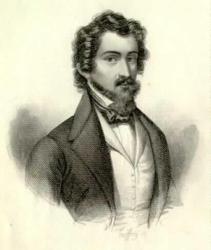
Hovhannes Tumanyan, an Armenian poet, publicist, and social activist, is considered the greatest representative of Armenian poetry of all time. He was born in 1869 in Lori, Northern Armenia, into a family of a priest. Tumanyan's father, a village priest, was a cheerful man who loved songs, music, national melodies, legends, and ballads. He always invited guests, including folk singers, storytellers, neighbors, and friends. All of this had a profound impact on Tumanyan's upbringing and development as a person and a poet.
Early Education and Work
From 1878 to 1883, Tumanyan received his primary education at the Jalaloghli School in Stepanavan. He then transferred to the Nersesian School in Tbilisi, the capital of Georgia. However, due to financial difficulties, he left school after three years. He started working at the Armenian spiritual church court in Tbilisi and later left to work at a publishing society. Despite earning little, Tumanyan remained in this job because books were his only source of inspiration and knowledge. He devoured them voraciously. During his time there, he had the invaluable opportunity to familiarize himself with the works of famous Armenian writers such as Ghazaros Aghayan, Khachatur Abovian, Mikael Nalbandian, Raffi, Gabriel Sundukyan, and Perch Proshyan, as well as world poetry by Goethe, Heine, Pushkin, and Lermontov.
Literary Achievements
In the mid-1880s, Tumanyan wrote his first well-known works, including the legend "The Dog and the Cat," the poem "The Song of the Ploughman," "Ancient Blessing," and the epic poem "Maro." In 1890, his first collection of poems was published in Moscow, followed by a second book two years later, which marked the true fame of his poetry. His outstanding poems, such as "Lorik Sako" (1889) and "Anush" (1890), depict the life and traditions of Armenian patriarchal villages, while the poem "Moan" (1890) portrays the peasants' struggle against exploitation. In 1902, Tumanyan created another masterpiece, the poem "The Capture of the Fortress of Tmuk," based on a legend. Tumanyan's role in the development of Armenian literature, particularly poetry, is invaluable. He wrote numerous beautiful Armenian fairy tales and ballads based on legends, such as "Aghtamar" (1892), "Parvana" (1903), "A Drop of Honey" (1909), and "The Shah and the Merchant" (1917). In 1902, he composed the poem "Sasuntsi David" based on the epic of the same name, which is considered one of his best works. His writings have been translated into many languages, inspiring paintings, operas, and films. Tumanyan's place and role in world literature put him in the same league as Shakespeare, Goethe, Pushkin, and Byron.
Social and Cultural Contributions
In addition to his creative work, Tumanyan actively engaged in public life. In 1899, he organized the literary club "Vernatun" in Tbilisi, which included prominent Armenian literary figures such as Avetik Isahakyan, Ghazaros Aghayan, Levon Shant, and Derenik Demirchyan. In 1912, he became the president of the Caucasian Society of Armenian Writers, a position he held for nine years (1912-1921). After the Armenian Genocide in Turkey in 1915, Tumanyan concentrated all his efforts on helping refugees starving near the walls of Etchmiadzin. However, not everyone understood his intentions, and he even had a falling out with the head of the Armenian Church. After the establishment of Soviet rule in Armenia, Tumanyan actively participated in the creation of a new Armenian culture. In 1921, he founded the House of Armenian Art in Tbilisi. In the same year, he became the president of the Armenian Relief Committee. However, his health deteriorated, and he passed away in the spring of 1923, leaving behind a vast literary legacy.