Paavo Jarvi
 USA
- Early Life and Training
- Building an International Career
- An Estonian Musical Home
- Current Work and Legacy
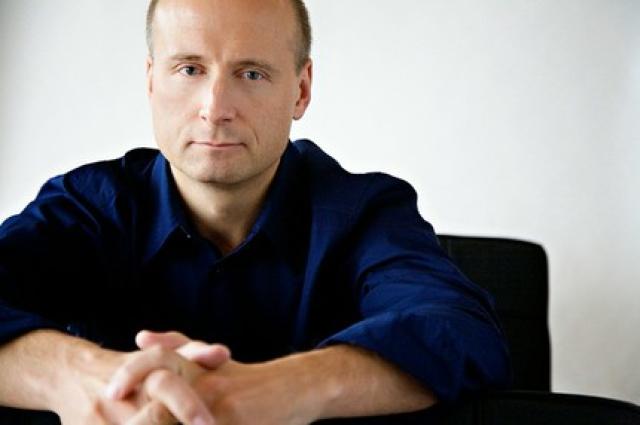
Paavo Järvi grew up inside a musical world and then built a conducting career across Europe, the United States, and Asia. The son of renowned Estonian conductor Neeme Järvi, he left Soviet Estonia as a teenager and trained in the United States. Today he is known for energetic, finely controlled performances, a wide-ranging recording career, and sustained advocacy for Estonian and other Nordic music.
Early Life and Training
Järvi was born in Tallinn on December 30, 1962, when Estonia was part of the Soviet Union. Music was a constant presence at home: his father, Neeme, was a conductor, and his younger brother Kristjan also became a conductor. As a child, Paavo studied percussion and conducting at the Tallinn School of Music. He later recalled hearing orchestral music at home and meeting major composers through his father’s work.
In 1980, when he was 17, Järvi moved with his family to the United States. The move brought a cultural shift as well as new musical opportunities. He continued his studies at Philadelphia’s Curtis Institute of Music and trained at the Los Angeles Philharmonic Institute, where he studied with Leonard Bernstein. The combination of European musical traditions and American conservatory training became a foundation for his later work with orchestras on both sides of the Atlantic.
Building an International Career
Järvi’s early conducting appointments included leading Sweden’s Malmö Symphony Orchestra from 1994 to 1997 and serving as principal guest conductor of the Royal Stockholm Philharmonic Orchestra and City of Birmingham Symphony Orchestra during the 1990s. In 2001, he became music director of the Cincinnati Symphony Orchestra, a post he held for a decade. The appointment established him among the leading conductors of his generation in the United States.
He expanded his European work as music director of the Frankfurt Radio Symphony from 2006 to 2013 and the Orchestre de Paris from 2010 to 2016. In 2004, he also became artistic director of the Deutsche Kammerphilharmonie Bremen. His work with that chamber orchestra has become a central strand of his career, with recordings and projects that bring large symphonic works into a close, responsive ensemble setting.
Järvi was chief conductor of the NHK Symphony Orchestra in Tokyo from 2015 to 2022 and is now its honorary conductor. Since 2019, he has led the Tonhalle-Orchester Zürich as music director. He also regularly works with major guest orchestras, including the Berliner Philharmoniker, Royal Concertgebouw Orchestra, New York Philharmonic, and Chicago Symphony Orchestra.
An Estonian Musical Home
Järvi has consistently used his international career to highlight music from Estonia and the wider Nordic region. In 2011, he founded the Pärnu Music Festival and the Estonian Festival Orchestra, bringing together Estonian musicians and artists from around the world. The festival also includes conducting masterclasses, creating a setting where performance and training happen side by side.
His recording of Jean Sibelius’s cantatas with the Estonian National Symphony Orchestra won the 2004 Grammy Award for Best Choral Performance. Other honors include the Sibelius Medal, the Hindemith Prize, Germany’s Opus Klassik Conductor of the Year award, and Estonia’s Order of the White Star. In 2026, Japan awarded him the Order of the Rising Sun, Gold Rays with Neck Ribbon, recognizing his contribution to the NHK Symphony Orchestra and Japanese musical life.
Current Work and Legacy
Järvi continues to lead the Tonhalle-Orchester Zürich and the Deutsche Kammerphilharmonie Bremen, while guiding the Estonian Festival Orchestra. In March 2026, the London Philharmonic Orchestra announced that he will become its Chief Conductor and Artistic Advisor beginning in the 2028–29 season. The appointment will add another major European orchestra to a career already shaped by long-term partnerships across several countries.
Järvi’s public identity is closely bound to the musical tradition of his family and homeland, yet his conducting career has been built through distinct collaborations and a large, varied discography. His work links the Estonian music scene to international concert halls, while his continued presence on the podium reflects a balance between permanent artistic partnerships and a broad life as a guest conductor.