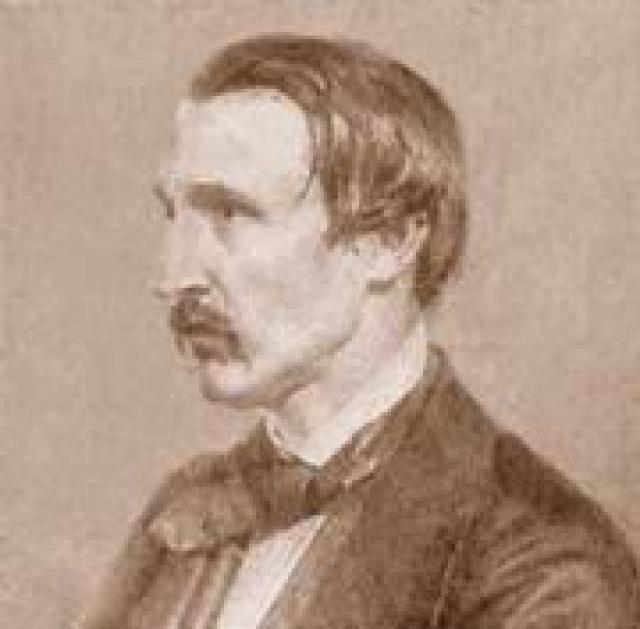
Panteleimon Kulish
 Ukraine
- Biography of Panteleimon Kulish
- Early Life and Education
- Political Activism and Exile
- Literary Career
- Literary Legacy and Ideological Contradictions
Biography of Panteleimon Kulish
Panteleimon Kulish was a talented poet, publicist, and historian from Little Russia (Ukraine). He began his literary career in 1840 and wrote in both Ukrainian and Russian languages. Kulish primarily utilized the techniques of Romanticism and "ethnographic realism" in his works.
Early Life and Education
Kulish was born into a lower-noble family that had lost its noble status. He attended Kiev University but did not complete his studies. In 1841, he started working as a teacher.
Political Activism and Exile
Due to his involvement in the Cyril and Methodius Brotherhood, where he represented the liberal-bourgeois wing, Kulish was sentenced to four years of administrative exile in Vologda in 1847. Afterwards, he was exiled to Tula. However, after repenting and appealing to the Tsar, he was forgiven in 1850 and moved to St. Petersburg. In the 1860s, he served in the government in Warsaw. From 1868 to 1871, he resided in Galicia before returning to St. Petersburg for some time.
Literary Career
Kulish's literary career began in 1840, and he wrote in both Ukrainian and Russian languages. His early works reflected his fascination with Ukrainian history and folklore, including the poem "Ukraine" (1843) and the novel "Mikhailo Charnyshenko, or Little Russia Eighty Years Ago" (parts 1-3, 1843). His novel "Chorna Rada, Chronicle of 1663" (1845-1857) laid the foundation for Ukrainian historical fiction. In this work, Kulish realistically and vividly depicted Ukrainian society, but his historical concept leaned towards idealizing the hetman elite.
In the 1850s and 1860s, Kulish was involved in active publishing activities. He established a Ukrainian printing house in St. Petersburg and published works by prominent authors such as Nikolai Gogol, Taras Shevchenko, and Marko Vovchok. He also translated works by William Shakespeare, Lord Byron, Johann Wolfgang von Goethe, Friedrich Schiller, Heinrich Heine, Adam Mickiewicz, and others into Ukrainian. Kulish released a collection of literary, ethnographic, and folklore materials titled "Notes about Southern Rus" (volumes 1-2, 1856-1857) and an almanac called "Khata" (1860). He also participated in the publication of the journal "Osnova" (1861-1862), which played a significant role in Ukrainian cultural and literary life.
Literary Legacy and Ideological Contradictions
Kulish's literary heritage is ideologically contradictory. In several fundamental aspects, his works stood in opposition to Russian and Ukrainian revolutionary democracy. In his historical works, such as "History of the Reunification of Rus" (volumes 1-3, 1874-1877) and "The Separation of Little Russia from Poland" (volumes 1-3, 1888-1889), Kulish evaluated the past of the Ukrainian people from bourgeois-nationalistic and monarchic positions. He asserted that the Ukrainian and Polish gentry had fulfilled a "civilizing mission" in the history of the Ukrainian people, while denying the positive role of the masses and evaluating the liberation movement from a reactionary perspective.


