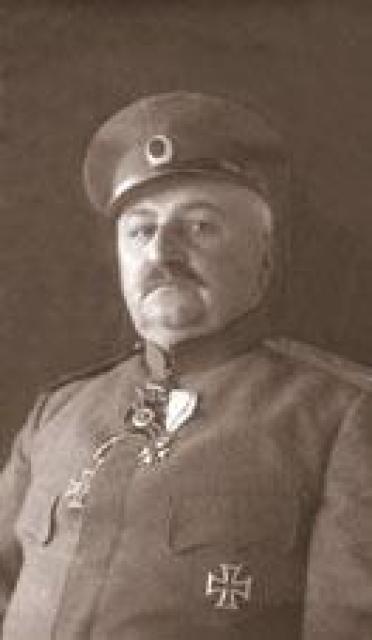
Panteley Kiselev
 Bulgaria
Panteley Kiselev became one of Bulgaria’s best-known generals through a battlefield victory that altered the course of the 1916 campaign in Dobruja. He had entered the army as a young officer, fought in several wars and risen through years of command before leading the assault on the Romanian fortress of Tutrakan. The operation made his name, but it was the culmination of a career shaped by Bulgaria’s repeated conflicts at the turn of the twentieth century.
Early Life and Military Training
Kiselev was born in Svishtov, a Bulgarian town on the Danube, on October 23, 1863. He entered the Sofia Military School in 1880 and graduated in 1883, beginning a career in the newly established Bulgarian Army.
His first major test came during the Serbo-Bulgarian War of 1885. As a company commander in the 3rd Bdin Infantry Regiment, he took part in the defense of the fortress at Vidin. He continued to advance through regimental and command assignments, serving in different parts of the country and gaining experience in both field operations and military administration. From 1906 to 1908 he served as commandant of Sofia. He later received additional military training in France and, in 1910, was promoted to colonel.
The Balkan Wars
Kiselev’s leadership was tested again in the Balkan Wars of 1912–13. He commanded the 8th Littoral Infantry Regiment, which fought Ottoman forces at engagements including Kirk Kilisse, Gechkenli and Karaağaç. During the Second Balkan War, his unit fought Serbian forces at the fortified Kalimanci position. The wars brought rapid shifts in alliances and heavy costs for the states of the region, while giving Kiselev extensive experience leading troops in difficult conditions.
At the beginning of the First World War, he was entrusted with the 4th Preslav Infantry Division. Bulgaria entered the war in 1915 on the side of the Central Powers, and the division became part of the campaign in Dobruja against Romania.
The Assault on Tutrakan
Kiselev’s defining command came in September 1916, when Bulgarian and German forces attacked the Romanian fortress of Tutrakan on the Danube. The position formed a key part of Romania’s defenses in southern Dobruja. Kiselev’s 4th Preslav Division led the assault on its southern sector, and as the battle developed he was placed in charge of the combined forces operating against the fortress.
After several days of fighting, the attackers captured Tutrakan on September 6. The victory opened the way for a further advance into northern Dobruja. Kiselev’s command was recognized by Bulgaria’s German allies, even though the two sides did not always agree on tactics. In Bulgarian memory, the battle became known as the “Tutrakan Epic,” a name that reflects the scale of the victory for the attacking forces. For Romania, the fortress’s fall was a major defeat, and the battle involved severe losses and the capture of large numbers of Romanian soldiers.
Kiselev continued to lead the 4th Division during the campaign that followed, including the advance toward the fortified line at Rasovo, Kubadin and Tuzla. His wartime role made him a prominent figure in the Bulgarian military.
Later Years and Legacy
In 1918, Kiselev was appointed to lead the Third Military Inspection Region. The following year he was promoted to General of the Infantry, the highest rank in the Bulgarian Army, and transferred to the reserve. He later moved to Sofia to live near his son. Kiselev died there of a heart attack on October 14, 1927.
Kiselev is remembered in Bulgaria chiefly as the commander of the Tutrakan assault, but his career spanned more than three decades of military service. From the defense of Vidin to the Balkan Wars and the Dobruja campaign, he advanced through a period in which Bulgaria’s army was repeatedly reshaped by conflict. His success at Tutrakan remains the episode most closely associated with his name, and the town has commemorated him with a monument.




