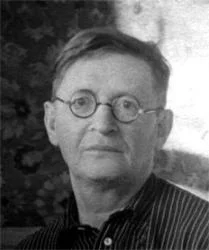
Paolo Alatri
- Education and the anti-fascist struggle
- Journalism, teaching, and historical work
- Public life and international engagement
- Legacy
Paolo Alatri (1918–1995) was an Italian historian, journalist and Communist parliamentarian whose scholarship traced the political life of Italy from the Risorgimento through the rise of Fascism. He also wrote on the reformist thinkers of the French Enlightenment and on Europe in the eighteenth century. His own life was shaped by the forces he studied: born into a Jewish family under Fascism, he began his academic career by publishing under an assumed name because of Italy’s racial laws, then joined the anti-fascist resistance and postwar politics.
Education and the anti-fascist struggle
Alatri was born in Rome in February 1918 and attended the Torquato Tasso high school, where classmates included future historian and politician Mario Alicata and architect Bruno Zevi. He graduated from the University of Rome in 1940, a period when the Fascist regime’s racial legislation was tightening restrictions on Jewish Italians. That same year, he began researching the liberal statesman Silvio Spaventa. His first book, a political biography of Spaventa, appeared in 1942 under the name Paolo Romano, allowing him to publish despite the racial laws.
After the fall of Mussolini in July 1943, Alatri joined the Partito d’Azione, an anti-fascist political movement. He took part in the defense of Rome following the German occupation and remained involved in the resistance until the city’s liberation. The experience linked his commitment to politics with the historical questions that would become central to his work: the survival of liberal institutions, the roots of authoritarianism, and how movements reshape a nation’s public life.
Journalism, teaching, and historical work
In the years after the war, Alatri became an active journalist. He was editor-in-chief of Italia Libera, worked for the newspaper Repubblica Italiana, and later served as editor in charge of Il Paese. He also contributed to prominent newspapers and journals, including l’Unità, Corriere della Sera and Rinascita. The newspaper world gave him a forum to address current political debates, while academic research supplied the historical depth behind his arguments.
Alatri joined the Italian Communist Party in 1948. Alongside journalism and political work, he taught history at universities in Palermo, Messina and Perugia. From 1971 he was a university professor, teaching modern history at the University of Perugia, where he later led its Department of Historical Sciences. His academic focus ranged widely: the Italian Risorgimento and the transition from liberal government to Fascism, as well as the intellectual and political culture of eighteenth-century France.
His books included studies of political struggles in Sicily after unification, the origins of Fascism, the Adriatic question after the First World War, and the ideas of Voltaire and Diderot. He also wrote a major biography of Gabriele D’Annunzio, a figure whose literary celebrity and political influence made him a revealing subject for a historian of modern Italy. Alatri’s work treated history as a contest among ideas, interests and institutions, rather than as a simple procession of leaders and events.
Public life and international engagement
Alatri brought his scholarship and political commitments into public office. He served twice as a Rome city councillor and in 1963 was elected to the Chamber of Deputies as a Communist representative for the Rome constituency. He remained involved in intellectual and cultural organizations as well, including the European Writers’ Community.
From 1961 to 1970, he chaired the Italy–Soviet Union Association, which promoted cultural relations between the two countries. In 1980, he resigned from its governing board in solidarity with Soviet dissident and writer Andrei Sakharov. The gesture illustrated that his political commitments did not prevent him from objecting when intellectual freedom was suppressed.
Legacy
Alatri died in Rome on 30 October 1995. His career bridged the archive, the newspaper, the classroom and parliament. The pseudonym he used for his first book recalled the restrictions under which he began; his later scholarship examined the consequences of dictatorship and the struggles that preceded it. Through books on Italian unification, Fascism, Enlightenment thought and political culture, he helped readers see modern history as a continuing debate about freedom, power and the responsibilities of public life.