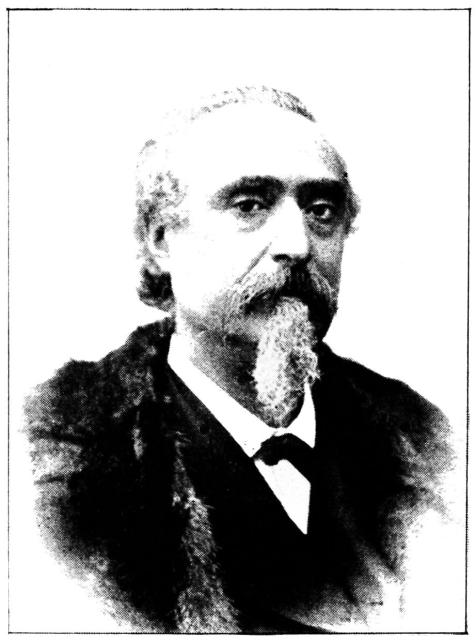
Paolo Mantegazza
 Italy
Italy- Biography of Paolo Mantegazza
- Professorship and Contributions
- Contributions to Medicine
- Legacy and Writings
Biography of Paolo Mantegazza
Paolo Mantegazza was an Italian physician, physiologist, and anthropologist. He was born in 1831 in Monza, Italy. He studied at the universities of Pisa and Milan, and obtained his medical degree in Pavia in 1854. Afterward, he embarked on a journey around the world, visiting Europe, India, and America, and eventually practiced medicine in Argentina and Paraguay. In 1858, Paolo returned to Italy and was appointed as a surgeon at the Milan Hospital. He also held a position as a professor of general pathology in Pavia.
Professorship and Contributions
In 1870, Mantegazza was appointed as a professor of anthropology at the Istituto di Studi Superiori in Florence. It was here that he founded Italy's first Museum of Anthropology and Ethnology and later became the founder of the Italian Anthropological Society. From 1865 to 1876, Mantegazza served as a deputy from Monza in the Italian parliament, and he was later elected to the Senate. During a time when popular and official science and culture in Italy were heavily influenced by the Roman Catholic Church, Mantegazza was a staunch liberal and advocated for the ideas of Darwinism in anthropology. It is known that he corresponded with Charles Darwin from 1868 to 1875.
Contributions to Medicine
Paolo Mantegazza believed that medicines and certain products would significantly alter humanity in the future. He advocated for experimental research and the use of cocaine as one of these "miracle drugs of the future." After witnessing the use of coca leaves by the indigenous people of South America during his travels, Mantegazza consumed a small amount of coca leaves daily and conducted self-experiments in 1859. He then wrote an article titled "Sulle Virtù Igieniche e Medicinali della Coca e sugli Alimenti Nervosi in Generale" ("On the Hygienic and Medicinal Properties of Coca and Nervous Nutrition in General"). In his work, the scientist enthusiastically noted the powerful stimulating effect of cocaine in coca leaves. It is also known that Paolo Mantegazza was an atheist.
Legacy and Writings
Paolo Mantegazza passed away in 1910 in San Terenzo. He left behind numerous essays and writings. He authored several books, translated into many languages, including Russian. Among them are "Fisiologia del Dolore" (Physiology of Pain), "Fisiologia dell'Amore" (Physiology of Love), and "Fisiologia dell'odio" (Physiology of Hate). His progressive philosophical and social views were published in 1871 in a 1,200-page tome titled "Quadri della Natura Umana. Feste ed Ebbrezze" ("Pictures of Human Nature. Feasts and Inebriations"), which many consider a masterpiece. Mantegazza, who was a great original, did not limit himself to professional and documentary literature; he also wrote a novel titled "Un Giorno a Madera" about the love of unhealthy individuals, which created a sensation. His lesser-known work is the science fiction and futuristic novel "L'Anno 3000" ("The Year 3000"), written in 1897.
Today, Paolo Mantegazza is remembered for his iconic expressions and aphorisms. He is credited with the quote, "If you feel happy, don't analyze your happiness. It would be like crushing a beautiful butterfly to see its beauty better."


