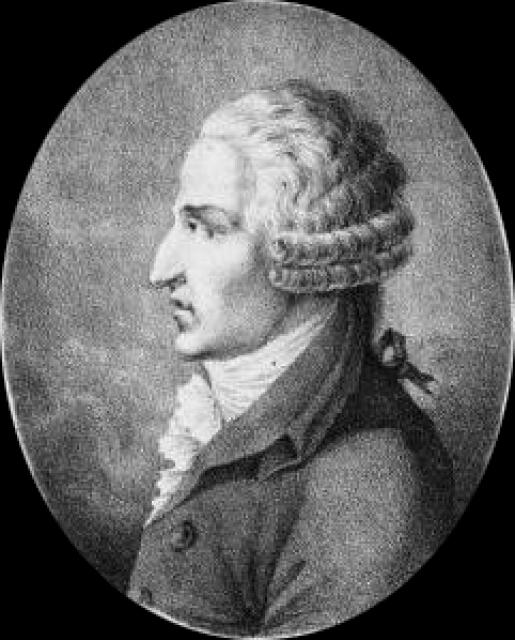
Pasquale Anfossi
 Italy
Italy- Pasquale Anfossi: From the Violin to Opera and Beyond
- Breakthrough and Operatic Success
- London Adventure and Musical Direction
- Return to Italy and Focus on Sacred Music
- Legacy and Influence
Pasquale Anfossi: From the Violin to Opera and Beyond
Early Life and Musical EducationPasquale Anfossi, an Italian composer, began his musical journey as a violinist, studying at the Neapolitan Loreto Conservatorium from 1744 to 1752. For a decade, he played in an opera orchestra before realizing his true calling as a composer. After studying composition, he premiered his first opera buffa, 'La Serva Spiritosa,' at the Rome Carnival in 1763.
Breakthrough and Operatic Success
Initially, Anfossi preferred to work under the mentorship of Antonio Sacchini, his teacher. However, his breakthrough came in 1774 with the premiere of 'L'incognita perseguitata' in Rome. By 1782, he had composed 30 operas, primarily in Venice and Rome, with occasional travels throughout Italy and Vienna.
London Adventure and Musical Direction
In 1782, Anfossi premiered his opera 'Il trionfo della costanza' in London, where it met with success. He remained in England for four years, working as a musical director and overseeing productions of both his own works and adaptations of others. Despite some critical acclaim, his final London production, 'L'inglese in Italia,' received harsh reviews.
Return to Italy and Focus on Sacred Music
Upon returning to Italy, Anfossi regained popularity with 'Le pazzie de' gelosi' at the Carnival. In 1789, he transitioned to composing primarily sacred music, becoming the chapel master of San Giovanni in Laterano, a position he held until his death.
Legacy and Influence
Pasquale Anfossi died in Rome in 1797, leaving behind an extensive body of work. While estimates vary, he is believed to have composed up to 60 operas and at least 20 oratorios. Early in his career, he was influenced by Niccolò Piccinni and Antonio Sacchini, but eventually developed a distinct style. Despite criticism for florid writing and weak characterization in his operas, Anfossi's works have been rediscovered and appreciated in recent years.



