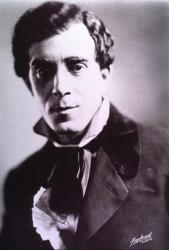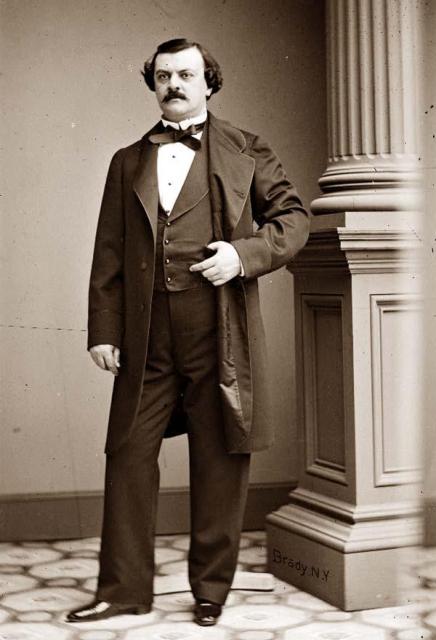
Pasquale Brignoli
 USA
USA- Early Life and Prodigy
- Professional Debut and Acclaim
- American Success and Personal Life
- Later Career and Legacy
Early Life and Prodigy
Pasquale Brignoli, born in Naples, Italy in 1824, displayed an exceptional musical talent from a young age. By the age of 15, he had composed his first opera, which he eagerly performed himself. His father, a glovemaker, encouraged his son's musical pursuits.
Professional Debut and Acclaim
However, Brignoli's voice did not fully mature until the age of 21. Despite the lack of information regarding his early musical training, he made his professional debut in 1850. A notable turning point came when renowned contralto Marietta Alboni advised him to pursue opera.
Brignoli's operatic debut in Paris propelled him into the spotlight. He subsequently enrolled in the prestigious Paris Conservatoire and went on to achieve widespread recognition in the United States. His American debut in "Lucia di Lammermoor" in 1855 ignited his popularity, which flourished throughout his career.
American Success and Personal Life
In the United States, Brignoli became renowned for his exceptional performances in operas such as "Il Trovatore," "La Traviata," and "Un ballo in maschera." He charmed audiences with his unparalleled vocal abilities, which remained remarkable even into his 60s.
However, Brignoli faced criticism for his perceived lack of dramatic flair. Nonetheless, his popularity allowed him to tour extensively throughout Europe and the United States, eventually making America his home. He married soprano Sallie Isabella McCullough in the 1880s, and together they formed an opera company where his wife made her debut. Marital troubles and financial difficulties led to their separation and eventual divorce.
Later Career and Legacy
Despite his success, Brignoli experienced financial hardship and passed away in poverty. However, his musical colleagues ensured a dignified funeral, complete with white roses, white doves, a crucifix, and specially composed mourning music. His burial took place on October 30, 1884.
Despite his remarkable achievements and public adoration, Brignoli's name has been largely forgotten. He remains absent from the renowned Grove Dictionary of Music and Musicians, a testament to the unfortunate obscurity that has befallen this talented tenor.