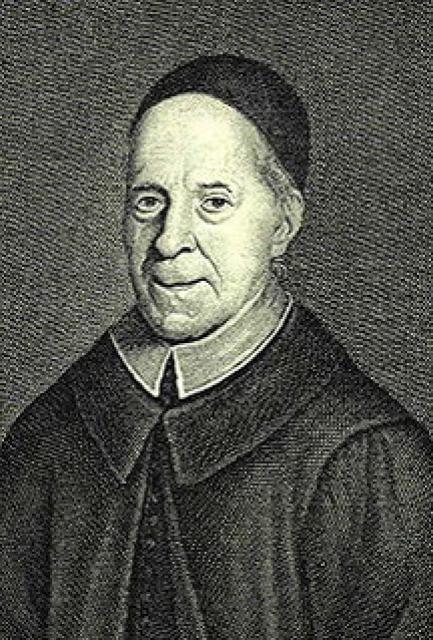
Pasquier Quesnel
 France
- Pasquier Quesnel: A Janseist Theologian
- Entry into the Oratorian Order
- Controversy and Exile
- Leadership and Persecution
- Condemnation and Controversy
- Legacy and Impact
Pasquier Quesnel: A Janseist Theologian
Early Life and EducationPasquier Quesnel was born in the Catholic tradition as a grandson of the artist François Quesnel. His intellectual prowess led him to graduate with distinction from the Sorbonne in 1653.
Entry into the Oratorian Order
In 1657, Quesnel joined the Oratorian congregation, a religious community known for its devotion and scholarly pursuits. However, his subsequent leanings towards Jansenism, a religious movement within Catholicism, would profoundly shape his life and career.
Controversy and Exile
Quesnel's book "Moral Reflections on the New Testament" (1668), which elaborated on Jansenist doctrines, ruffled feathers among the Church hierarchy. His commentary on the works of Pope Leo the Great further alienated ecclesiastical authorities and forced him to flee to Brussels in 1681. Assisted by the Jansenist leader Antoine Arnauld, Quesnel continued his theological writings.
Leadership and Persecution
Following Arnauld's death, Quesnel emerged as the leading figure of the Jansenist movement. His "Moral Reflections," revised and expanded in 1693, became a definitive text for Jansenist beliefs. However, Jesuit influence resulted in his arrest in 1703. He managed to escape and sought refuge in Amsterdam.
Condemnation and Controversy
In 1713, Pope Clement XI issued the papal bull Unigenitus, which condemned 101 propositions from Quesnel's book as heretical. The condemnation sparked controversy, as some of the condemned statements were taken out of context or were quotations from Augustine, leading to protests from German and French bishops.
Legacy and Impact
Despite the papal condemnation, Quesnel's "Moral Reflections" remained a popular and influential work among Jansenists and their sympathizers. His writings and the controversy surrounding them solidified the division between Jansenism and the official Catholic Church, shaping the religious landscape of the 18th century. Quesnel's legacy as a theologian and a critic of ecclesiastical authority continues to resonate today.